The Night Shift That Teaches Machines to Drive: Meet Aichi's Hidden Annotation Army
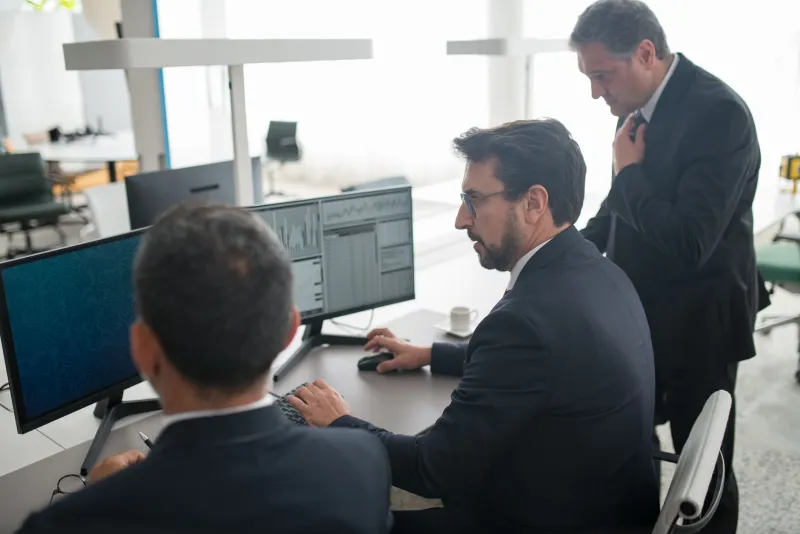
At 5 a.m. in a quiet office block on the edge of Nagoya, the day's driving has already happened — and the real work is just beginning.
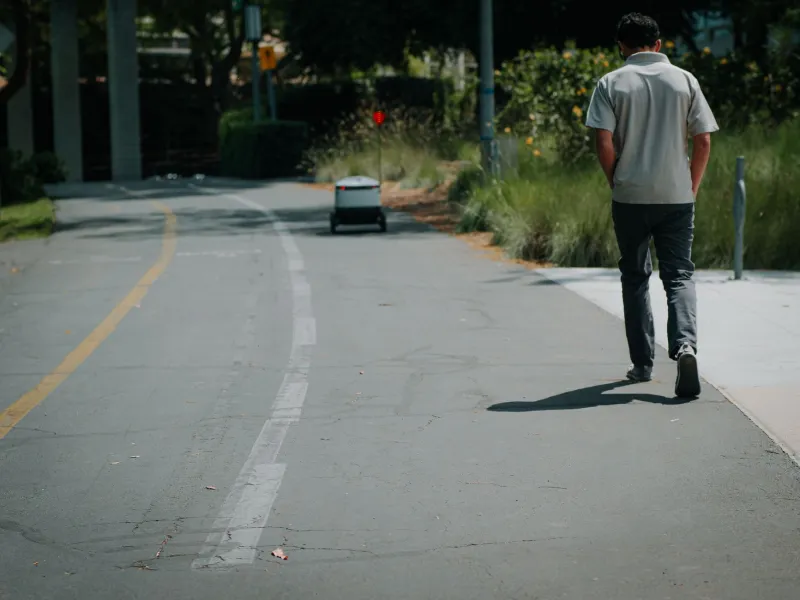
Rows of monitors glow with dashcam footage harvested overnight from Aichi's autonomous test fleets: rain-slicked arterials in Toyota City, a delivery robot hesitating at a Nagakute crosswalk, a cyclist weaving unpredictably through a residential cut-through. On screen, a young analyst drags a bounding box around a reflective traffic cone half-hidden by shadows, then pauses the clip and flags it with a note: rare occlusion, low light — escalate to scenario team.
She is one of hundreds of annotation specialists, edge-case curators, and scenario writers whose labor underwrites every mile Aichi's driverless vehicles travel. And as American AV companies confront mounting public skepticism, this invisible workforce may be the industry's most persuasive — and most overlooked — story.
The Hands Behind the Hands-Free
Autonomous vehicles are often marketed as the triumph of pure computation. The reality is messier. Every neural network steering an Aichi shuttle was shaped by people who watched, clipped, labeled, and argued over millions of frames of driving footage.
The workflow resembles a newsroom more than a lab. Junior reviewers tag objects — pedestrians, debris, lane markings degraded by typhoon rain. Senior curators triage the strange stuff: the man who walked backward across an intersection while staring at his phone, the tarp that blew onto a highway and convinced a perception system it was a stopped vehicle. Each becomes a teaching case, fed back into training pipelines within days.
"The model doesn't learn from the ten thousand boring commutes," one scenario lead explained. "It learns from the one Tuesday morning when everything went sideways. Our job is to find that Tuesday."
What the Work Pays — and What It Costs
Annotation roles in Aichi typically start in the range of ¥250,000 to ¥320,000 per month — modest by regional standards, but with a defined ladder. Reviewers can advance to curator positions, then to scenario authorship, where pay crosses into engineering-adjacent territory and staff write synthetic test cases that stress the fleet before it ever encounters the real world.
The labor is not without strain. Hours of visual scrutiny produce genuine fatigue, and the region's operators have adopted rotation schedules, mandatory eye-rest intervals, and ergonomic standards that US gig-based labeling platforms — often staffed by scattered contractors paid per clip — have rarely matched. Where American AV firms frequently outsource annotation overseas, Aichi keeps the work close to the fleets, on the theory that reviewers who actually ride the shuttles label the footage differently.
That proximity matters. Several curators described recognizing specific intersections from their own commutes, and flagging hazards a pure contractor might never notice.
A Public Relations Story Hiding in Plain Sight
Here is the irony American operators should sit with: the industry's biggest trust problem may be solvable not with more lidar, but with more transparency about the humans involved.
US surveys consistently show that a majority of Americans remain afraid of riding in a fully driverless vehicle. The dominant counterargument — crash statistics, disengagement rates — rarely moves the needle. What does move it, Aichi's experience suggests, is demystification. When passengers learn that every confusing moment their shuttle encountered was reviewed, debated, and turned into a training scenario by a named professional, the machine stops feeling like an oracle and starts feeling like an institution.
Some Aichi operators have begun publishing anonymized "case of the week" breakdowns — a near-miss, the annotation trail, the resulting software update — and report measurable gains in rider trust surveys. Imagine a Phoenix or San Francisco operator doing the same, showing residents the actual people in their own city who review the footage from their own streets.
The Loop Closes in Aichi
The site you're reading takes its name from a loop, and the annotation floor is where that loop is most human. Data flows from the fleet to the reviewers, from the reviewers into the models, and from the models back onto Aichi's roads — where new edge cases wait to be caught by the next 5 a.m. shift.
For American AV companies burning fortunes on perception research, the lesson is almost embarrassingly affordable: hire the annotators well, keep them close, and tell the public they exist. The machines may drive themselves, but the trust still has to be built by hand.