Knock, Ride, Repeat: How Aichi Won Over the Passengers Who Wanted Nothing to Do With Driverless Cars
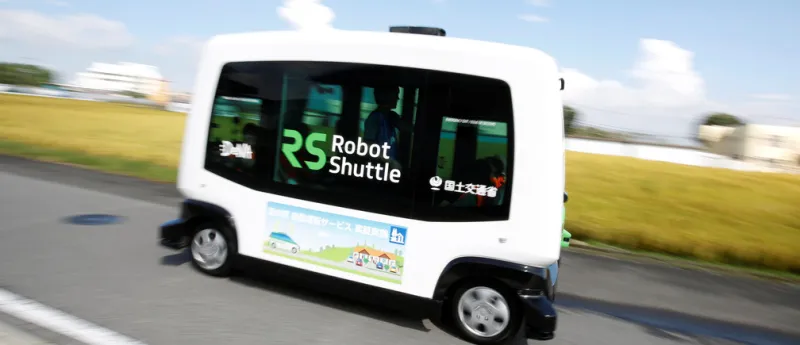
Photo: elderly passenger boarding autonomous shuttle bus community outreach Japan, via pricetags.ca
The Resistance Nobody Mapped
When Aichi Prefecture's autonomous transit planners sat down with their deployment maps in early 2024, they had routes, charging depots, and sensor coverage sorted. What they lacked was something no lidar unit could detect: the location of every neighborhood where residents simply did not want a driverless bus.
The resistance was not abstract. It lived in specific households — a retired taxi driver of thirty-five years who considered automated shuttles a personal insult, a cluster of rural elders in the eastern hills who had never trusted anything they couldn't look a human in the eye, and a surprising number of middle-aged commuters who regarded the whole enterprise as a toy for engineers.
Rather than treat these holdouts as a public relations problem, Aichi's operators treated them as an engineering problem. And like any engineering problem, they built a method, measured the outputs, and iterated.
The Door Knock as Deployment Strategy
The first lesson from Aichi's outreach campaign is almost embarrassingly analog: someone had to physically show up.
Field teams — many of them employed by the transit cooperatives rather than the technology vendors — went household to household along the proposed corridors. They didn't arrive with brochures about neural networks. They arrived with a simple offer: a free ride, on the resident's schedule, with no obligation and no sales pitch at the end.
The taxi loyalists proved the toughest audience. Many had spent careers behind the wheel and viewed autonomy as a threat to their identity as much as their livelihood. Aichi's answer was counterintuitive: some of the region's retired professional drivers were recruited — paid — as safety stewards and community liaisons for the very services they once resented. The man who once cursed the driverless bus now answers questions about it at the neighborhood stop.
"We stopped arguing with the people who knew roads best," one program coordinator explained during a 2025 briefing. "We hired them."
Ambassadors With Wrinkles, Not Lanyards
The second pillar of the campaign was the community ambassador program — and its design holds a pointed lesson for American agencies.
Aichi did not send young engineers in branded polos to senior centers. It identified the people already trusted in each district: the pharmacist who had served three generations, the head of the local farmers' cooperative, the grandmother who organized the block association. These figures were given early, private access to the vehicles, thorough training, and — critically — the standing to say no. Ambassadors who remained skeptical after the orientation were not pressed into service; their hesitation was treated as feedback.
The result was a persuasion chain that no advertising budget could replicate. When Mrs. Tanaka from the co-op says the bus stopped smoothly and the attendant was kind, her neighbors listen in a way they never would to a government commercial.
Trial Rides and the Psychology of the First Trip
Behavioral researchers involved in the program identified the first ride as the single decisive moment in rider conversion. A bad first experience — a hard brake, a confusing boarding process, a vehicle that felt cold and bureaucratic — could harden resistance permanently.
So Aichi engineered the first ride like a product launch. Trial passengers were paired with a human host. Routes for first-timers avoided the region's trickier intersections. Boarding was rehearsed until the door sequence felt as familiar as a train's. Elderly riders received in-person orientation at their own door, not a tutorial screen at the curb.
The conversion numbers, according to prefectural surveys published in mid-2025, were striking: among residents who completed a supervised trial ride, acceptance of regular driverless service rose from under 30 percent to above 70 percent. Among those who never took a trial ride, attitudes barely moved.
What American Transit Agencies Should Steal
The United States is entering its own era of driverless public service, and it is entering with a trust deficit Aichi never faced. Surveys consistently show American skepticism toward autonomy running higher than Japanese, and in communities where transit agencies have a history of over-promising — or worse, abandoning routes — that skepticism is earned, not irrational.
Aichi's playbook translates with adjustment:
- Knock first, launch second. Deployment schedules should be gated on door-to-door outreach completion, not just technical readiness. In cities like Detroit or St. Louis, where transit trust is fragile, a route that opens without face-to-face engagement is a route primed for backlash.
- Convert the critics, don't outshout them. Retired truck drivers, veteran bus operators, and cab drivers are not obstacles to a driverless rollout — they are its most credible messengers, if given a stake.
- Treat the first ride as sacred. A single hard braking event on a first trip can undo a year of outreach. American pilots should consider supervised, human-hosted introductory rides as a standard onboarding tier.
- Give ambassadors veto power. Credibility cannot be manufactured. If a trusted local says the service isn't ready, the program should listen before the press does.
Trust Is Infrastructure
Aichi's deepest insight is one American planners tend to file under "soft" costs: persuasion is not marketing. It is infrastructure, no less essential than charging stations or fiber backhaul, and it depreciates if not maintained.
The prefecture's most skeptical riders — the taxi loyalists, the rural elders — did not come around because the technology improved. The technology had been adequate for years. They came around because someone knocked on their door, remembered their name, and let them leave the bus under no obligation to believe anything.
As driverless services prepare to reach American cities and suburbs, the question facing transit agencies is not whether the vehicles are ready. Aichi has spent a decade proving they can be. The question is whether anyone is willing to do the slow, unglamorous work of the doorstep — and whether agencies will budget for trust the way they budget for steel and silicon.
The last mile of autonomy, it turns out, is not measured in meters. It is measured in handshakes.