The Curbside Land Rush: How Aichi's Cities Rewrote the Rules of the Street — and Why American Mayors Are Taking Notes
For most of the twentieth century, the curb was the most generous subsidy in American municipal history. Cities handed over billions of dollars' worth of street frontage — some of the most accessible real estate any downtown owns — to anyone with a license plate and a quarter for the meter. In Aichi Prefecture, planners have begun asking a question that reframes everything: what if that land were priced, allocated, and reused according to what a city actually needs?
The answer is transforming streetscapes across Nagoya, Toyota City, and a cluster of surrounding municipalities, and it is starting to surface in budget hearings from Los Angeles to Washington, D.C.
The End of Storage-As-Default
Aichi's starting point was arithmetic, not ideology. When autonomous shuttles and shared robo-vehicles began operating in designated corridors, planners noticed that a substantial share of curbside space sat vacant for most of the day — storage for private cars that moved twice daily at best. Meanwhile, delivery vans double-parked, buses idled in traffic lanes, and elderly residents walked farther than they should have to reach a transit stop.
The region's response was a reallocation framework rather than a single policy. Parking lanes in several districts were converted into designated autonomous loading zones, where driverless delivery vehicles can pull in on a precise schedule, offload, and clear out within minutes. In other blocks, curb cuts became micro-parks, wider sidewalks, or dedicated pick-up hubs where ride-hailing and autonomous shuttles exchange passengers without blocking a travel lane.
The crucial innovation is not any single conversion — it is the principle behind them: curb space is treated as an asset with a measurable purpose, reviewed on a regular cycle, and reassigned when demand shifts.
Pricing the Last Free Lunch
American cities have begun circling this idea, in part out of fiscal necessity. Parking tickets and meter revenue are embedded in municipal budgets across the United States; some large cities collect tens of millions of dollars annually from enforcement alone. That revenue stream creates a quiet dependency: the more a city punishes curbside misuse, the more it earns from it.
Aichi's model points in the opposite direction. Rather than maximizing fines, municipalities there aim to minimize the need for them by matching each stretch of curb to a use — loading, boarding, greening, or mobility hubs — and charging dynamic rates where demand warrants. A loading bay that sits empty at 2 p.m. can be priced cheaper than one contested at noon; a pick-up hub used by hundreds of autonomous shuttle riders daily justifies its footprint in ridership, not citations.
For cash-strapped American cities, the trade is appealing but not simple. Giving up meter revenue requires confidence that the replacement uses — congestion relief, faster deliveries, safer pedestrian corridors — will generate economic value that reaches the tax base by other routes. Early American pilots, including dynamic curb-pricing studies in a handful of large metros, suggest the value is real but diffuse, which makes it a harder sell to a city council reviewing next year's budget.
What the Converted Curb Looks Like
Walk through the reworked corridors in Aichi and the changes are modest at street level but cumulative in effect:
- Scheduled loading bays where autonomous delivery pods arrive in staggered windows, eliminating the double-parking churn that clogs comparable American commercial strips.
- Mobility hubs — compact clusters combining shuttle stops, bike parking, and package lockers — replacing rows of metered spaces near stations.
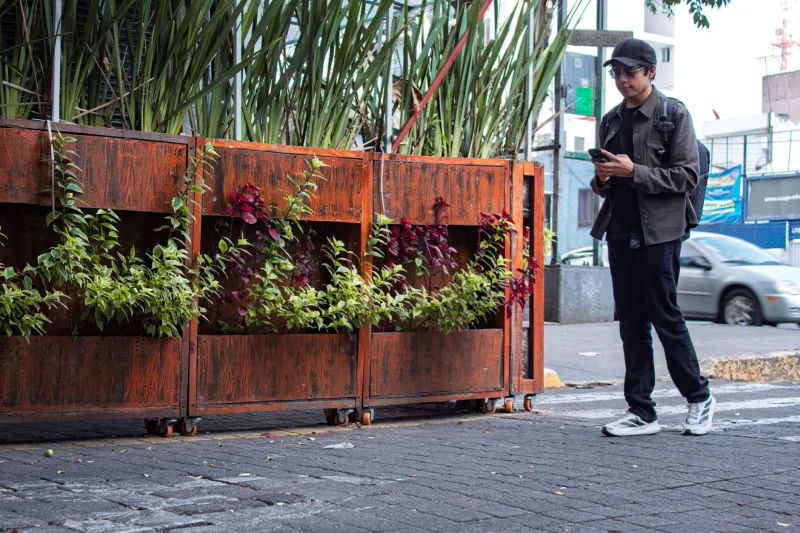
- Greenway segments where former parking lanes now hold trees, seating, and stormwater planters, a small but meaningful offset to urban heat.
- Data-driven enforcement, where sensors flag dwell-time violations, allowing a smaller enforcement footprint and fewer disputes.
None of this required bulldozers. Most conversions happened with paint, planters, bollards, and revised ordinances — the cheapest infrastructure a city can buy.
The Political Problem the Curb Poses
If there is a cautionary note for American mayors, it is that the curb is politics in miniature. Every converted parking space has a former user, and in the United States those users vote, shop locally, and write letters. Aichi's planners worked around this by phasing conversions in pilot districts, publishing before-and-after data on traffic flow and business activity, and letting results — not rhetoric — carry the argument to neighboring districts.
The lesson translates: curb reform succeeds as a demonstration, not a decree.
A Different Definition of Street Value
The deeper shift Aichi represents is philosophical. For a century, the measure of a good street was how many cars it could store and move. The emerging measure — visible now in the pick-up hubs and loading zones lining the region's autonomous corridors — is how much value a street edge can produce per meter: boardings, deliveries, greenery, commerce, and safe passage.
American cities will not copy Aichi wholesale; their fiscal structures, car cultures, and governance differ too much. But as autonomous delivery and shared shuttles scale in US metros, every mayor will eventually face the same inventory question Aichi answered first: what is the curb for? The region's answer — treat it as living infrastructure, not free parking — is rapidly becoming the reference case for the street-level land rush now gathering on the horizon.