Where the Sidewalk Thinks: Aichi's Smart Bus Shelters and the Case for Building Autonomy Into the Street Itself
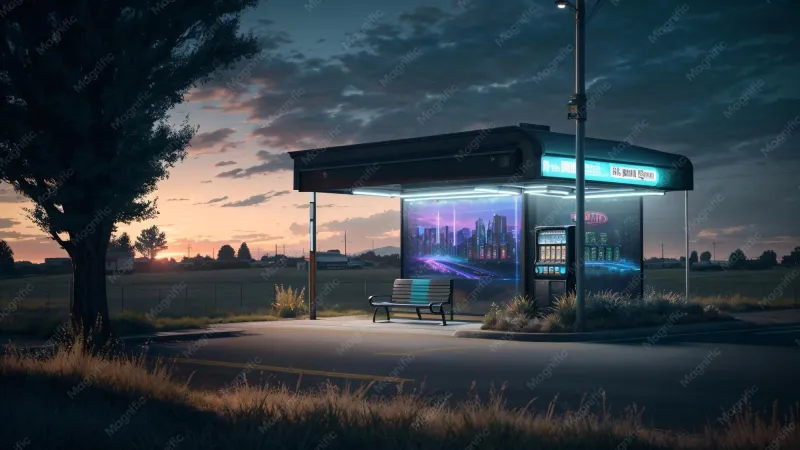
Photo: modern smart bus shelter with digital display at dusk, via img.freepik.com
Ask most American transit officials where autonomy begins and they will point to the vehicle. Ask the planners behind Aichi's driverless corridors and they point somewhere humbler: the curb.
Along the region's automated bus routes, the bus shelter has been quietly rebuilt from the ground up. It no longer merely shields riders from rain. It watches, listens, reports, and — in subtle ways — responds. And in doing so, it has become the least glamorous and most consequential piece of the autonomy puzzle.
The Shelter as Sensor
Aichi's upgraded stops read less like street furniture and more like distributed instrumentation. Embedded lidar and stereo cameras track queue lengths and dwell times. Air quality and temperature sensors adjust ventilation and lighting. Pressure-sensitive platforms detect crowding before it becomes a safety issue, feeding that information upstream so fleet operators can dispatch additional vehicles before a bottleneck forms.
The critical design choice, according to engineers familiar with the deployments, was placement. Rather than bolting intelligence onto vehicles after the fact, Aichi anchored it into fixed infrastructure that never moves, never needs refueling, and never blocks its own field of view. A shelter-mounted sensor enjoys years of consistent sightlines; a vehicle-mounted one must relearn every intersection it passes through.
Data With a Short Memory
Surveillance is the obvious American objection, and Aichi's operators have engineered around it deliberately. Most sensing at the shelters is edge-processed: crowd counts, dwell times, and accessibility events are computed locally and transmitted as anonymous metrics rather than raw footage. Video, where it exists, is retained for days, not months, and is tied to safety incidents rather than general monitoring.
The approach mirrors debates now playing out in American cities over transit surveillance — but with a different default. In Aichi, the question was never whether the infrastructure would collect data, but what the narrowest useful version of that data could be.
Why This Matters for US Transit
American agencies face a rare opening. Federal infrastructure dollars are already flowing into bus rapid transit lines, shelter replacements, and corridor upgrades in cities from Seattle to Columbus. Those projects involve pouring concrete and running conduit anyway. Embedding connectivity and sensing at design time costs a fraction of what retrofitting does.
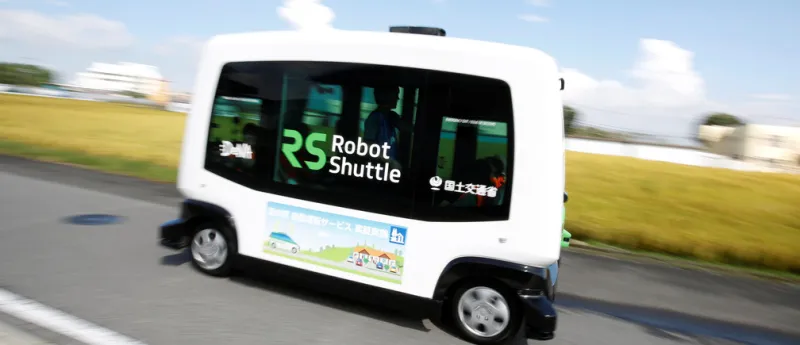
There is also a fleet argument. Autonomous shuttles deployed on routes with instrumented stops need less onboard redundancy for boarding operations, passenger detection at curbs, and arrival prediction — functions the infrastructure can partially shoulder. For operators wrestling with the economics of low-speed autonomous service, that shift of workload from vehicle to street could be the difference between a pilot that scales and one that quietly dies.
The Accessibility Dividend
What has won the most attention, though, is not the robotics. It is who the shelters serve. Real-time audio wayfinding assists visually impaired riders. Platform sensors flag when a wheelchair user is waiting so drivers — human or otherwise — know to deploy ramps proactively. Adaptive lighting responds to foot traffic after dark, addressing the safety concerns that keep many American riders off buses in the first place.
In other words, the intelligence was justified not by autonomy but by ridership — and autonomy arrived as a beneficiary. That sequencing may be the most exportable lesson of all: build street infrastructure people want, and the machines will find it useful too.
From Aichi to the American Curb
None of this suggests Aichi's model can be lifted wholesale. Japanese municipalities operate with different privacy norms, denser corridors, and municipal utilities that simplify power and connectivity. American deployments would confront a patchwork of state vehicle codes, franchised transit operators, and — in many cities — shelters owned by advertising companies with their own agendas.
But the underlying proposition translates cleanly. Autonomy in transit has been framed, overwhelmingly, as a vehicle problem. Aichi's corridors suggest it is at least as much a street problem. The bus stop that watches back is not a novelty; it is an argument that the first place a driverless system should learn about its city is exactly where the city waits for it.