After Dark, the Machines Take Over: Inside Aichi's Overnight Freight Revolution
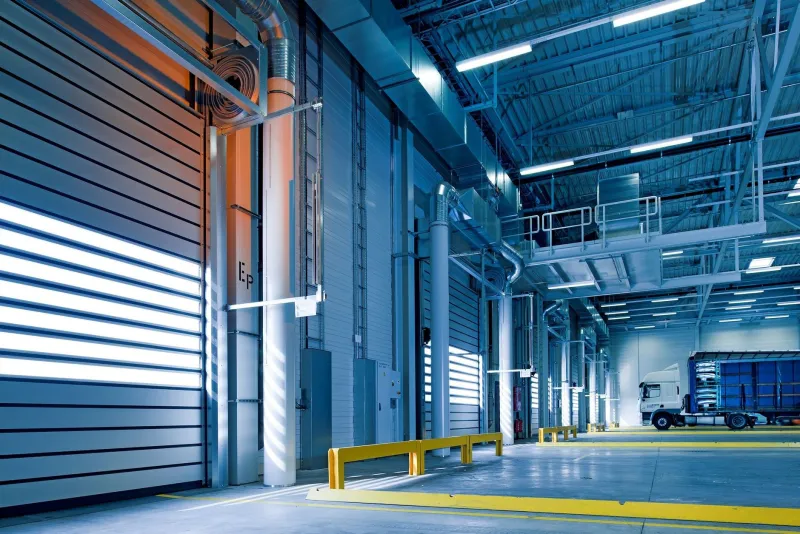
At 2:47 AM, most of Nagoya is asleep. The port's container cranes sit idle, the expressways carry only a scattering of headlights, and the restaurants around Fushimi Station have long since rolled down their shutters. But on the eastern edge of the metro area, inside a cluster of logistics facilities that operate with barely a flicker of human presence, the night shift is in full swing.
Driverless trucks glide between loading bays on predetermined routes. Automated docks align with vehicle beds to millimeter tolerances. Conveyor systems sort freight that arrived hours earlier from Tokyo and Osaka, staging it for dawn departures to Aichi's manufacturing corridors. Nobody is drinking coffee to stay awake, because almost nobody is there.
For American logistics executives wrestling with a freight labor market that never fully recovered from the pandemic, this scene deserves closer scrutiny. Aichi's overnight autonomy model isn't a futuristic concept — it's operational infrastructure running tonight, tomorrow night, and every night after.
Why the Night Shift Is Autonomy's Best Opening
The autonomous vehicle industry in the United States has largely staked its reputation on daytime, urban, passenger-facing operations — robotaxis navigating San Francisco traffic or Phoenix intersections in full daylight. Night driving remains the harder problem: reduced sensor reliability, degraded camera performance, and edge cases that compound in low light.
Aichi's logistics operators approached the equation from the opposite direction. Rather than asking autonomy to master the hardest conditions first, they built environments where autonomy performs best — controlled routes, predictable traffic, standardized vehicle types, and terminals designed around machine workflows rather than human ones.
Nighttime freight is the ideal candidate for this strategy. Overnight highway volumes in Japan's industrial corridors are dramatically lower than daytime peaks. Weather patterns are more stable. And critically, the stakes of a delay are different: a freight truck arriving at 4 AM instead of 3 AM rarely disrupts a consumer the way a delayed rideshare does.
The result is a division of labor that feels almost counterintuitive. Human drivers in Aichi increasingly handle the complex, daytime, first- and last-mile segments where judgment matters most. Autonomous systems dominate the long, dark, repetitive middle — exactly the hours that human drivers find most dangerous and least desirable.
The Hub Model: Redesigning Freight Around Machines
What distinguishes Aichi's approach from pilot programs elsewhere is not the vehicles themselves but the infrastructure surrounding them. The region's logistics hubs — several developed in coordination with the prefecture's smart mobility initiatives — are purpose-built for autonomy in ways most American distribution centers are not.
Consider the loading process. In a typical US warehouse, a human driver backs a trailer into a dock, negotiates the yard, and manages paperwork at a guard shack. Each of those steps assumes a person in the cab. Aichi's autonomous-ready terminals replace them with automated trailer positioning, digital gate clearance, and robotic pallet handling that communicates directly with the vehicle's arrival schedule.
The design philosophy extends to scheduling. Freight volumes in these hubs are deliberately smoothed across the night, avoiding the thundering-herd departures that clog American logistics yards at shift changes. Vehicles are dispatched in staggered waves, keeping the corridor between Nagoya and the Chukyo industrial belt in constant but manageable motion.
This is infrastructure policy as much as technology policy. Aichi's prefectural government treated autonomous logistics corridors as public works — coordinating road signage, lane designations, and data-sharing standards across municipalities. The 2025 infrastructure investments in the region have accelerated this, funding connectivity and monitoring systems that give autonomous freight vehicles a digital backbone alongside the physical one.
The American Counterfactual
The United States faces a trucking shortfall measured in the tens of thousands of drivers, with long-haul and overnight routes bearing the worst of it. Turnover in the industry is chronic. The average age of American truckers keeps climbing. And the hours between 10 PM and 6 AM — when crashes are statistically most likely and rest requirements bite hardest — are precisely where capacity thinnest.
Yet most American autonomy efforts in freight remain tethered to a model that assumes human involvement at both ends: a driver handles local delivery, hands off to an autonomous system for the highway leg, then a second driver takes the final miles. It's a sensible transitional design, but it preserves the labor bottlenecks at the edges and caps the efficiency gains in the middle.
Aichi's hub model suggests a different sequencing. By automating the terminal environment itself — not just the vehicle — the transfer points that require human labor shrink dramatically. The autonomy isn't confined to the highway; it extends into the yard, the dock, and the staging area. In effect, the entire overnight segment becomes a closed loop that humans supervise remotely rather than staff physically.
What US Operators Can Realistically Borrow
None of this implies that American logistics companies can simply replicate Aichi's playbook wholesale. Japan's advantages are partly structural: shorter freight distances, dense industrial clusters, and a regulatory posture that permits supervised autonomous operations on designated routes with fewer jurisdictional hurdles than America's patchwork of state rules.
But three transferable lessons stand out.
First, invest in the terminal, not just the truck. The marginal cost of upgrading a distribution center for machine-friendly operations — automated dock scheduling, digital yard management, standardized vehicle communication protocols — is far lower than the cost of perfecting fully autonomous urban driving, and the operational returns arrive sooner.
Second, treat night routes as the beachhead. Rather than attempting autonomy everywhere at once, US carriers could designate specific overnight corridors between major distribution hubs, building operational track record in the conditions where the technology is already closest to reliability.
Third, coordinate infrastructure publicly. Aichi's model works because the prefecture acted as convener, aligning road authorities, logistics firms, and vehicle makers around shared standards. In the US, where freight corridors cross multiple state lines, that coordination role would need to fall to federal agencies or multistate compacts — a policy conversation that has barely begun.
The Quiet Hours Advantage
There is a certain elegance in Aichi's overnight strategy that goes beyond economics. The hours when autonomous systems struggle least are the hours when human society needs them most — when driver fatigue is most dangerous, when labor is scarcest, and when the supply chain's connective tissue is most fragile.
American logistics has long treated the night as a problem to be endured. Aichi is treating it as an asset to be engineered. As US supply chain operators search for capacity that no longer exists in the labor market, the answer may not be on the highway at all — it may be in the hubs, the docks, and the quiet, machine-lit hours between midnight and dawn.