How Aichi's Automated Parking Ecosystem Is Quietly Solving a Crisis America's Planners Never Could
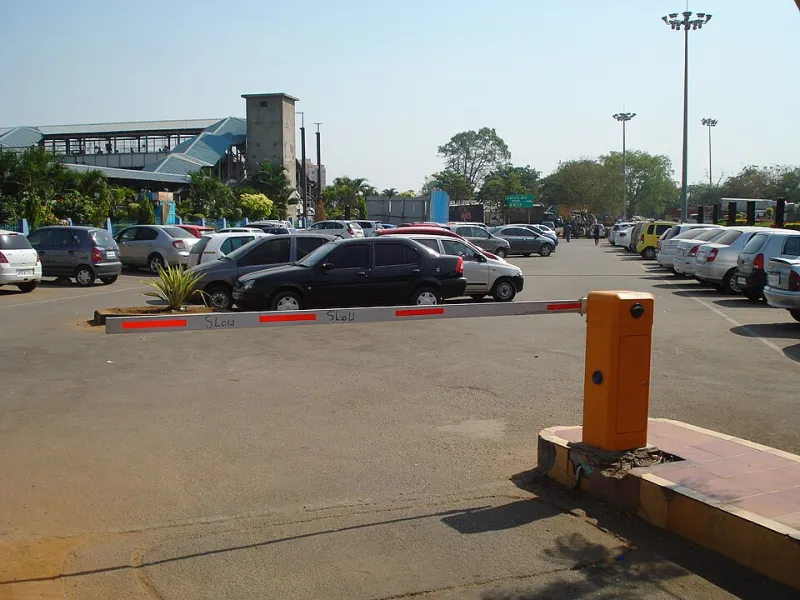
Photo: Srikarkashyap, CC BY-SA 3.0, via Wikimedia Commons
Ask any urban planner in Chicago, Houston, or Los Angeles what keeps them awake at night, and the answer rarely sounds glamorous: parking. Not self-driving cars barreling down freeways at 80 miles per hour, not the algorithmic choreography of a busy intersection — just parking. The mundane, space-devouring, economically ruinous reality of where vehicles go when humans are done with them. In the United States, parking infrastructure consumes an estimated 17,000 square miles of land — more than the entire state of Connecticut — and yet American cities still report that drivers spend an average of 17 minutes per trip searching for an open space. The problem is enormous, and it has resisted every conventional solution attempted over the past half century.
Aichi Prefecture, however, has been quietly rewriting the terms of this challenge. Through a coordinated combination of robotic valet systems, dense vehicle-to-infrastructure (V2I) communication networks, and policy frameworks that treat parking as a dynamic mobility resource rather than static real estate, Aichi's engineers and city planners have developed an approach to automated parking management that is drawing serious attention from transportation officials far beyond Japan.
The Architecture Behind Aichi's Parking Intelligence
At the core of Aichi's system is a principle that American parking policy has historically resisted: treating every available space as a node in a living network rather than an isolated commodity. In several of Aichi's urban districts, parking structures have been retrofitted — and new ones purpose-built — with sensor arrays, edge computing units, and short-range communication modules that speak directly to compatible vehicles. When an autonomous or semi-autonomous car enters a designated zone, it negotiates with the surrounding infrastructure in real time, receiving not just a destination space but an optimized routing path that accounts for pedestrian traffic, competing vehicles, and structural load balancing across the facility.
The robotic valet component takes this a step further. Rather than requiring a driver to maneuver into a tight stall, purpose-designed automated platforms receive the vehicle at a drop-off point and transport it mechanically to a designated slot — sometimes stacked vertically in configurations that allow a single footprint to accommodate two or three times the vehicles of a conventional surface lot. The compactness gains are significant. Early implementations in Nagoya, Aichi's largest city, have demonstrated space efficiency improvements of up to 40 percent compared to self-park structures of equivalent floor area.
The Real Estate Dividend
The implications for land use extend well beyond the parking garage itself. In American cities, surface parking lots and low-rise parking structures occupy some of the most economically valuable land in the urban core. A 2023 analysis by the Parking Reform Network estimated that surface lots alone represent more than $20 billion in underutilized property value across the 50 largest U.S. metros. That figure does not account for the opportunity cost of building heights that municipal parking minimums have historically suppressed.
Aichi's model suggests a different path. By demonstrating that automated systems can serve the same vehicle throughput in a fraction of the footprint, the region has created a policy opening for municipalities to reduce or eliminate minimum parking requirements without triggering the access concerns that have historically made such reforms politically difficult. Several Aichi municipalities have already adjusted their zoning codes in response, permitting mixed-use developments to meet parking obligations through shared automated facilities rather than dedicated on-site structures.
For American cities currently wrestling with housing shortages and commercial vacancy crises, this is not an abstract lesson. It is a tested framework for converting parking overhead into developable square footage — without reducing vehicle access.
V2I Communication as the Connective Tissue
The robotic hardware is impressive, but industry observers who have studied Aichi's approach closely tend to emphasize something less visible: the density and reliability of the underlying V2I communication layer. Automated parking at scale is fundamentally an information problem. Vehicles need to know where space is available before they enter a zone, not after they have already contributed to congestion. Infrastructure needs to anticipate demand patterns across the day, not simply react to arrivals.
Aichi's 2025 infrastructure investments have prioritized the buildout of dedicated short-range communication (DSRC) and cellular vehicle-to-everything (C-V2X) coverage across its major urban corridors. The result is a system in which parking demand data flows continuously between vehicles, facilities, and municipal traffic management centers. Dynamic pricing, real-time availability broadcasting, and predictive reservation systems have all become operationally viable as a consequence — not as isolated applications, but as integrated features of a shared data environment.
This is precisely where the gap with current American infrastructure practice becomes most apparent. U.S. cities have largely approached smart parking as a collection of vendor-specific applications — this garage has an app, that block has sensors — without the interoperable backbone that makes system-wide optimization possible. Aichi's investment in standardized communication protocols offers a replicable model for American transit agencies and departments of transportation that are beginning to grapple with this fragmentation.
Lessons for the American Policy Conversation
None of this is to suggest that Aichi's solutions translate directly to American cities without modification. Land use patterns, legal frameworks, and driving cultures differ substantially. The dense, mixed-use urban fabric of Nagoya is not Phoenix, and the policy levers available to Japanese municipal governments are not identical to those available to city councils in the United States.
What does translate, however, is the underlying logic: that parking is not merely a convenience amenity but a systemic variable in urban mobility, and that treating it with the same engineering rigor applied to roads, transit, and digital infrastructure produces measurable improvements in congestion, land efficiency, and economic productivity. American planners have known this intellectually for years. Aichi has now demonstrated it operationally.
As U.S. cities accelerate their own autonomous vehicle pilot programs and begin the long process of updating infrastructure codes to accommodate connected and automated mobility, the question of where vehicles park — and how intelligently they do so — will become increasingly central to the policy agenda. The answers being developed in Aichi's parking facilities and V2I corridors today may prove to be among the most consequential exports this region delivers to the global mobility conversation.
The glamorous headlines in autonomous transportation tend to go to highway speed trials and robotaxi launches. But the breakthrough that reshapes American cities may well arrive at three miles per hour, guided by sensors, in a parking structure in Nagoya.