When Close Enough Is Never Good Enough: How Aichi's Zero-Defect Culture Is Rewriting the Rules of American AV Safety

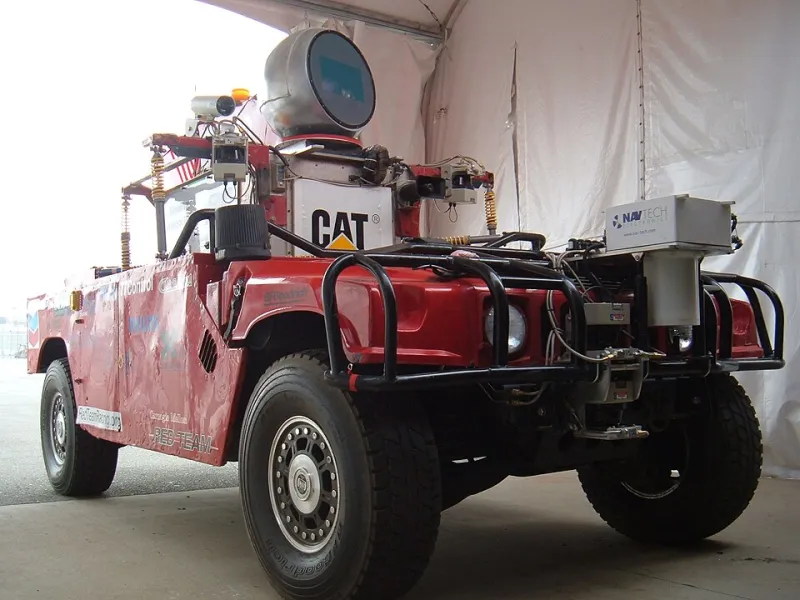
Photo: Dannel Malloy, CC BY 2.0, via Wikimedia Commons
There is a Japanese manufacturing concept called monozukuri—loosely translated as "the art of making things"—that carries within it a moral weight unfamiliar to most Western engineering cultures. It implies not merely competence but devotion: a commitment to the object being made that borders on the philosophical. In Aichi Prefecture, where Toyota, Denso, and a constellation of Tier 1 suppliers have operated for generations, monozukuri is not a marketing slogan. It is the operating system beneath the operating system.
That cultural substrate is now producing something with concrete, measurable consequences for American roads: a set of autonomous vehicle safety benchmarks so demanding that U.S. regulators, insurers, and liability attorneys are being forced to reckon with standards they did not write and did not expect.
The Tolerance Gap
To understand the divergence, consider a single component: the LiDAR sensor array. In a typical Silicon Valley-influenced development cycle, sensor calibration tolerances are established, tested against a defined scenario set, and then iterated upon as real-world edge cases surface post-deployment. The philosophy is empirical and reactive—gather data at scale, patch the anomalies, improve the model.
Aichi-based suppliers operate from a fundamentally different premise. At facilities like those operated by Denso's advanced mobility division in Kariya, calibration tolerances are not starting points; they are destinations. Engineers speak of deviation thresholds measured in fractions of a millimeter and production sign-off protocols that would be considered excessive by any cost-benefit analysis conducted in Palo Alto. The logic is not economic. It is reputational and, in a deeper sense, ethical: a defective component that reaches a customer is a failure of character, not merely a failure of process.
The practical consequence of this divergence is a tolerance gap—a measurable difference between what Aichi-sourced hardware can reliably deliver and what current U.S. federal safety standards actually require. According to discussions at the 2024 SAE Government-Industry Meeting in Washington, D.C., several National Highway Traffic Safety Administration (NHTSA) working groups have begun examining whether existing Federal Motor Vehicle Safety Standards adequately capture the performance ceiling that next-generation sensor systems are now capable of achieving. The implication is significant: standards written for a lower ceiling may be inadvertently protecting underperformers.
Rapid Iteration vs. Incremental Refinement
The philosophical clash between these two development models has real-world consequences that extend well beyond the factory floor. Silicon Valley's rapid iteration approach—exemplified by the over-the-air update cycles of companies like Waymo and Cruise—treats the deployed fleet as a living laboratory. Failures are data. Edge cases are inputs. The road itself is the test environment.
Aichi's incremental refinement model inverts this logic almost entirely. Extensive closed-course validation, multi-year component durability testing, and what Toyota engineers describe as "worst-case scenario pre-emption" mean that vehicles reach public roads having already encountered—in simulation and controlled testing—failure modes that iterative developers will only discover in the field. The process is slower. The upfront costs are substantially higher. The resulting product, however, carries a different risk profile.
This distinction is becoming acutely relevant to American insurance carriers. Several major U.S. underwriters, including divisions of Munich Re and Swiss Re operating in the domestic market, have begun developing separate actuarial models for AV systems depending on their development lineage. Vehicles incorporating components validated under Aichi-style zero-defect protocols are being assessed differently than those developed under rapid-iteration frameworks—a quiet but consequential acknowledgment that the manufacturing philosophy behind a system affects its real-world reliability in ways that mileage logs alone cannot capture.
Liability in the Millimeter Age
The legal community is arriving at similar conclusions through a different door. As autonomous vehicle litigation begins to accumulate in U.S. courts—cases involving sensor failure, software misclassification, and human-machine interface breakdowns—attorneys on both plaintiff and defense sides are discovering that the documentation standards maintained by Aichi-based manufacturers are unlike anything previously encountered in domestic product liability cases.
Traceability records that log individual component performance from raw material sourcing through final assembly, calibration certificates tied to specific vehicle identification numbers, and failure mode analysis documents running to hundreds of pages per component category are becoming exhibits in cases where the central question is: what did the manufacturer know, and when did they know it? In several pending cases reviewed by legal analysts, the depth of Aichi-origin documentation has complicated plaintiff arguments that manufacturers were indifferent to known risks—because the documentation demonstrates, with uncomfortable specificity, that the risks were identified, quantified, and designed against.
This is reshaping how U.S. courts conceptualize the duty of care in autonomous vehicle manufacturing. The emerging standard, still far from settled law, is beginning to ask not merely whether a manufacturer met existing federal requirements, but whether it met the highest achievable standard given the current state of the art. When the state of the art is being defined in Aichi, that question has a particular answer.
Consumer Trust as a Competitive Moat
Perhaps the most consequential arena for this precision-driven philosophy is the least quantifiable: consumer trust. Polling data from the American Automobile Association consistently shows that American drivers remain deeply skeptical of autonomous systems, with majorities expressing reluctance to ride in fully self-driving vehicles. The reasons cited most frequently are not unfamiliarity with the technology—they are concerns about reliability and accountability.
Aichi's manufacturers are, perhaps inadvertently, addressing both. The reliability argument is addressed through the hardware and process standards described above. The accountability argument is addressed through the documentation culture: when something goes wrong, there is a paper trail of extraordinary depth.
For American consumers conditioned by years of high-profile autonomous vehicle incidents to view the technology with suspicion, the provenance of the systems in their vehicles may become a meaningful purchasing consideration. Whether that consideration manifests as a brand preference, an insurance discount, or a regulatory certification category remains to be determined. What is increasingly clear is that the question of how an autonomous vehicle was built—not merely what it can do—is entering the mainstream conversation about mobility safety in the United States.
The paradox, in the end, is not really a paradox at all. Aichi's obsession with precision is not inefficiency dressed up as virtue. It is a long-duration bet that in a technology where the consequences of failure are measured in human lives, the market will eventually reward the manufacturers who refused to treat "good enough" as a destination.
On the evidence of 2025, that bet is beginning to pay out.