When Cars Learn to Speak: Aichi's Quiet Quest to Give Driverless Vehicles a Universal Body Language
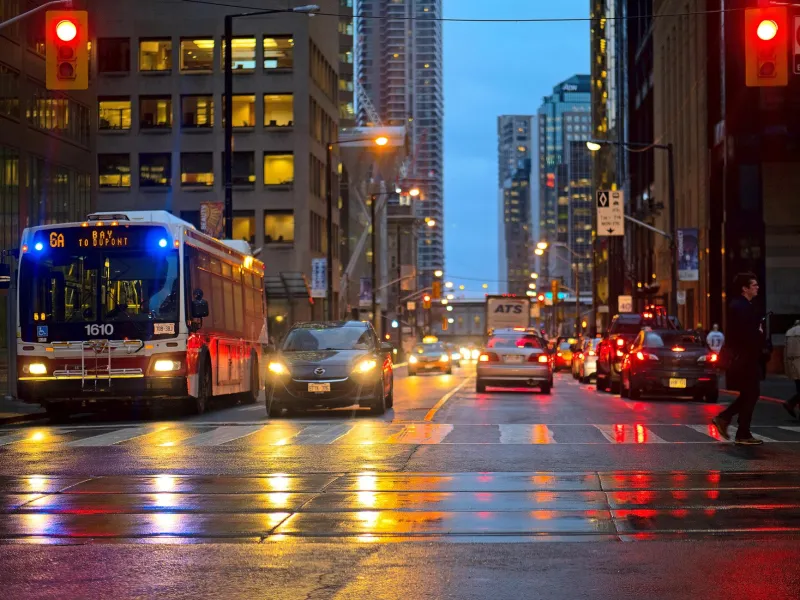
Stand at a crosswalk in downtown Nagoya long enough and you will notice something strange: the cars are talking. Not with horns, not with engine revs, but with light. A slow amber pulse across the vehicle's front fascia tells a waiting pedestrian it has been seen. A green wash along the door line signals the cabin is clear to board. A soft blue halo means the vehicle is yielding, even when it has no legal obligation to do so.
None of this vocabulary existed five years ago. All of it was invented here, in Japan's Aichi Prefecture — the industrial heartland that built Toyota and, increasingly, is building the grammar of driverless communication.
The Language Nobody Designed
For a century, road communication was an accident of hardware. The horn was a klaxon borrowed from ships. Turn signals were an aftermarket add-on until the 1940s. Eye contact — the most important signal of all — was free, supplied by whoever happened to be behind the wheel.
Autonomy deletes that last channel entirely. A pedestrian staring down an approaching robotaxi gets no confirmation that the machine has registered their presence. The vehicle may be perfectly safe; it simply cannot say so. Human factors researchers call this the "ghost car problem," and it is one of the underappreciated barriers to public acceptance in American cities from San Francisco to Phoenix.
Aichi's engineers began attacking it not as a feature problem but as a language problem — one that requires grammar, not gadgets.
Building the Grammar
The prefecture's collaborative autonomy program, which pairs automakers with municipal transit operators and academic human-factors labs, has spent the past two years codifying what it calls external communication protocols: a standardized set of light patterns, display behaviors, and movement cues that mean the same thing regardless of manufacturer.
The principles are deceptively simple. First, signals must be legible at a glance by someone who has never seen an autonomous vehicle before. Second, they must never imply that the pedestrian should yield — responsibility stays with the machine. Third, every signal must be unambiguous to onlookers other than the intended recipient, so a cyclist two lanes over can read the same exchange.
Field testing in Toyota City and on the Meitetsu bus corridors has produced findings that read like anthropology. Americans, researchers note, tend to interpret a flashing light as a warning; Japanese test subjects read the same pattern as a greeting. Color expectations diverge sharply by age. Older pedestrians in Aichi's pilot districts trusted large text displays far more than abstract light shows — a finding that pushed the consortium toward hybrid interfaces combining both.
America's Standards Vacuum
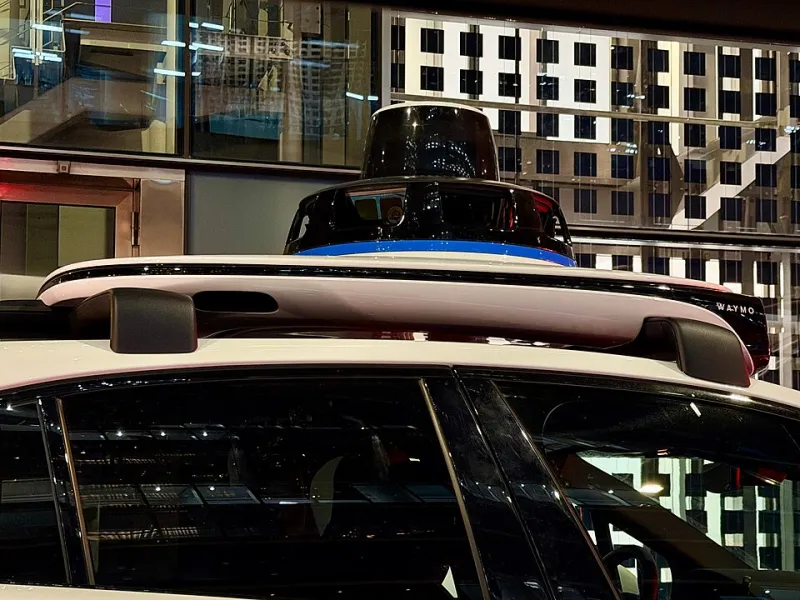
Now contrast that with the United States, where autonomous vehicles from competing companies share city streets with no common signaling vocabulary at all. One operator's vehicle may flash white when yielding; another's may display a pixel-art face; a third may use nothing beyond standard turn signals. To a pedestrian, each company is effectively speaking a different language, and none of them is being taught in driver's ed.
The regulatory gap is real. NHTSA's framework governs what a vehicle may not do — certain crash-avoidance behaviors, minimum lighting requirements — but says almost nothing about what a driverless vehicle should communicate to the humans around it. Meanwhile, SAE and ISO working groups have drafted external communication guidelines, but adoption remains voluntary and uneven.
Aichi's approach suggests a different path: not top-down mandate, but consortium-driven consensus among operators who share a road network and a liability environment. Because the prefecture's transit agencies, logistics fleets, and automakers jointly funded the research, they had a commercial reason to agree on one dialect. American operators, competing for market share in the same handful of cities, have had no such incentive — yet.
Etiquette as Infrastructure
The deeper insight from Aichi is that signaling is not a feature bolted onto autonomy. It is infrastructure, in the same sense as lane markings or traffic signals. A road network where vehicles communicate inconsistently is a network that works less well for everyone — human drivers included, who must now decode machines they never negotiated with before.
There are early signs the lesson is crossing the Pacific. Several US cities negotiating AV permits have begun asking operators about external communication behavior, and at least one state legislature has floated requiring standardized "yield displays." The state of the art, however, still lags what a commuter bus in Kasugai displays today.
The horn's fate is instructive. In Aichi's fleets, it survives only as an emergency device, stripped of its everyday role as insult and greeting. What replaced it — the patient pulse of light that says I see you, go ahead — is arguably the more civilized invention.
American roads will fill with driverless vehicles whether or not anyone writes the etiquette handbook. Aichi's quiet contribution is proof that the handbook can be written, tested, and agreed upon before the confusion sets in. The alternative is a decade of pedestrians learning ten dialects on the fly, one close call at a time.