Rivals Sharing the Road: Inside Aichi's Unlikely Pact to Pool Autonomy's Most Guarded Secrets
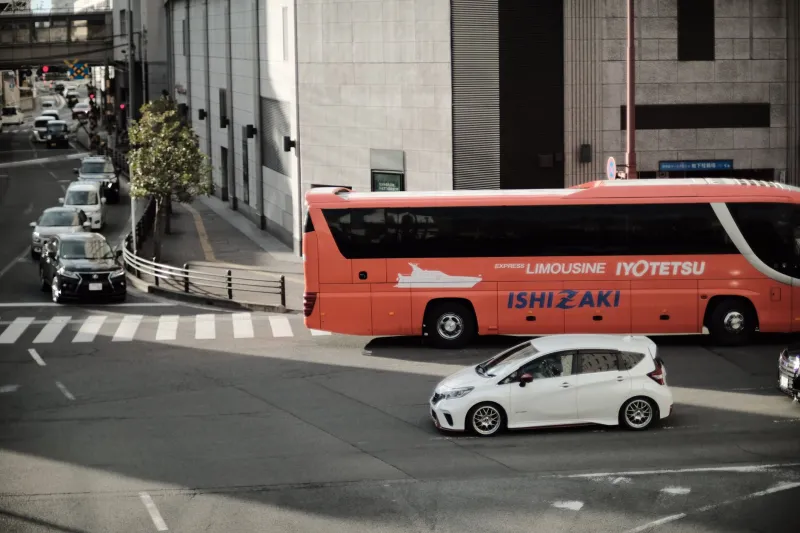
Photo: Oleg Yunakov, CC BY-SA 4.0, via Wikimedia Commons
In the United States, an autonomous vehicle's driving log is treated roughly the way a soda company treats its formula: sealed, lawyered, and guarded. In Aichi Prefecture, the birthplace of Toyota and the center of Japan's most aggressive autonomy buildout, the opposite norm has taken hold. Automakers, transit operators, tier-one suppliers, and municipal agencies contribute anonymized sensor data and edge-case incident reports to a shared regional repository — including data collected on routes their rivals also operate.
The arrangement has no catchy brand name and no American-style launch event. Engineers here refer to it simply as the loop: sensor feeds, disengagement records, and near-miss telemetry flowing into a common pool, then flowing back out as validated safety cases that every participant can build on. Understanding how the loop works — and why it exists at all — may be the single most instructive lesson American regulators and AV executives could study in 2025.
What the Pact Actually Covers
The exchange is narrower than a full data dump, and that precision is part of its durability. Participating companies contribute three categories of material:
- Hazardous-event records. Any scenario that triggered an emergency maneuver, a disengagement, or a safety-driver takeover is logged, scrubbed of proprietary identifiers, and submitted within a fixed window.
- Infrastructure interaction data. Lane markings, signal timing anomalies, temporary construction zones, and roadside sensor coverage gaps are mapped once and shared region-wide rather than re-discovered by every fleet independently.
- Validation test results. Standardized scenario suites — heavy rain on the Meishin corridor, school-zone behavior in Okazaki, delivery-vehicle interactions in Nagoya's dense commercial wards — are run against common benchmarks so results are comparable across companies.
What stays private is equally deliberate: perception-model weights, route optimization algorithms, and commercial telemetry remain inside each company's walls. The pact governs the evidence of what happened on the road, not the methods used to drive.
Why Aichi Could Pull It Off
Three conditions made the arrangement possible, and none of them is easily transplantable.
First, density of relationships. Aichi's mobility supply chain is generations deep; the same engineering families have supplied multiple automakers for decades, and pre-competitive standards work — crash safety, emissions testing, component interoperability — has a long institutional history here. Sharing hazard data felt less like defection and more like an extension of existing practice.
Second, regulatory leverage. Prefecture-level approval for expanded driverless operation is contingent on demonstrable regional safety performance, not just fleet-level metrics. A shared incident database gives regulators a coherent picture across operators, which in turn accelerates every participant's expansion requests. Cooperation became the path to commercial speed, not a tax on it.
Third, scale asymmetry. Unlike the US market, no single Aichi player commands a dominant robotaxi share. With the competitive field relatively flat, no incumbent feared that pooling hazard data would hand a decisive advantage to a rival.
The American Resistance
The obstacles in the United States are not primarily technical. Standardized formats for incident reporting exist in embryonic form — NHTSA's standing general order for crash reporting proved that federal data collection is feasible, even if its output is inconsistent and sparse. The barriers are structural and cultural.
Litigation exposure tops the list. American AV companies operate under a discovery regime where shared hazard data could surface in product-liability suits, and corporate counsel treat any pooled repository as a plaintiff's exhibit waiting to be compiled. Antitrust anxiety compounds the problem; joint data collection among direct competitors invites scrutiny even when the pro-competitive safety rationale is genuine.
There is also the arms-race narrative. Venture-backed firms raised capital on the promise of insurmountable data advantages, and executives are loath to admit the moat is thinner than the pitch deck suggested. Waymo's published safety research is genuinely rigorous, and Tesla's fleet telemetry is vast — but neither is structured for peer verification, and both are curated by the company being evaluated.
What a US Version Might Look Like
A workable American adaptation would not require the giants to open their vaults. It would require four commitments:
- A federal safe harbor shielding shared hazard data from civil discovery, modeled on aviation's voluntary safety-reporting programs, which transformed airline safety without exposing carriers to routine litigation.
- A common incident taxonomy — standardized fields for weather, road geometry, vulnerable road user interaction, and system state — so that a near-miss in Phoenix is legible to an engineer in Austin.
- Third-party stewardship, likely through a neutral consortium or university-affiliated trust, to keep the repository out of any single competitor's hands.
- Regulatory credit: jurisdictions that grant expansion permits should weight participation in the shared pool as evidence of safety maturity, converting cooperation into a commercial incentive.
The aviation analogy is instructive beyond legal structure. Commercial aviation's transformation into the safest transport mode in history rested substantially on competitors agreeing that a near-miss at one airline was a warning to all of them. Nobody accused Delta of giving United a competitive edge by disclosing a runway incursion.
The Stakes of Standing Still
The cost of America's data fragmentation is already visible. Every operator re-learns the same edge cases — the cyclist at dusk, the delivery truck double-parked in a bike lane, the four-way stop where convention overrides the right-of-way rule — at the cost of millions of test miles each. Meanwhile, state-by-state permitting proceeds on thin, operator-supplied evidence, and public trust erodes with each high-profile incident that no competitor's data could have anticipated or explained.
Aichi's experiment does not resolve every question. Participation audits are imperfect, smaller suppliers worry about contribution burdens, and the long-term question of who profits from pooled data remains contested. But the core finding is hard to dispute: when the region's competitors agreed to share the road's hardest lessons, validation timelines shortened, regulator confidence rose, and no participant lost its technical edge.
The loop in Aichi runs on a simple premise that American AV culture has not yet absorbed: on the road, safety data is not a weapon. It is infrastructure — and infrastructure, like the roads themselves, works best when everyone with a stake helps maintain it.