Charging Without a Gate: Aichi's Invisible Tolling Model Meets America's Gas Tax Problem
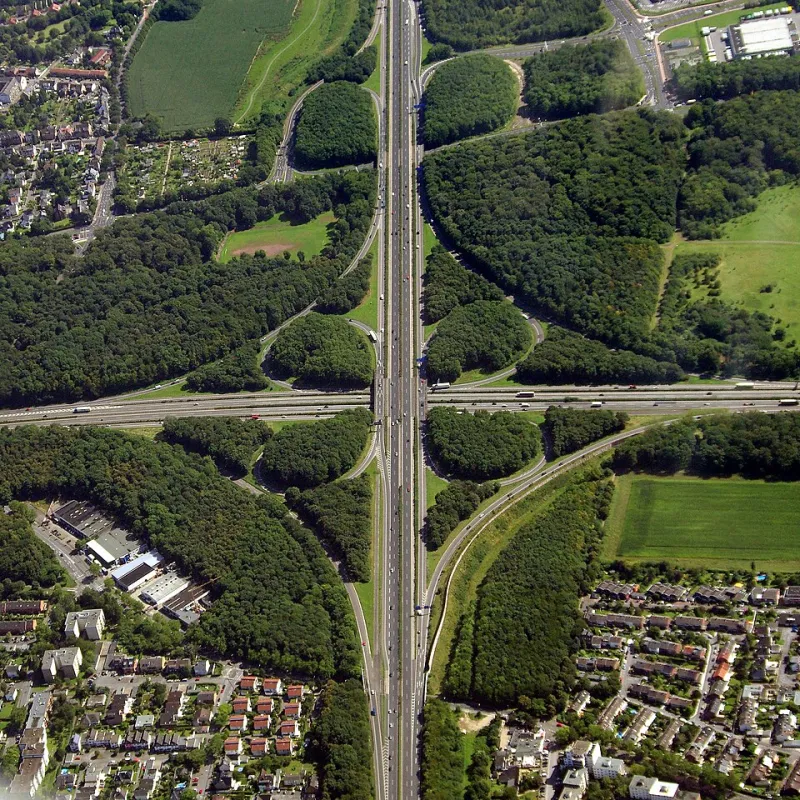
Photo: El Grafo, CC BY-SA 3.0, via Wikimedia Commons
Somewhere along the Meitetsu corridor between Nagoya and the Toyota industrial belt, a vehicle passed a tolling point this morning. No driver noticed. There was nothing to notice — no overhead gantry flashing a price, no transponder beep, no lane split with a cash basket. The charge was calculated, authenticated, and settled inside the vehicle's own operating stack before the wheel hub finished a single rotation.
This is road pricing as Aichi now practices it in 2025: not a toll booth you drive through, but a ledger entry your car makes on your behalf. And for American transportation departments watching their fuel tax base evaporate, that distinction may be the most important import Japan's mobility heartland has ever offered.
The Revenue Crisis Nobody Wanted to Solve This Way
The arithmetic confronting US statehouses is grim and getting grimmer. The federal gas tax has held at 18.4 cents per gallon since 1993, while fuel efficiency, electrification, and remote work have steadily eroded what it collects. The Highway Trust Fund has been propped up by repeated general-fund transfers. States from Oregon to Utah have piloted road user charge programs — Oregon's OReGO has been running since 2015 — but enrollment remains voluntary, modest, and politically fraught.
The friction has never really been technical. GPS-based mileage metering works. The problems are privacy, equity, and the sheer political toxicity of making drivers pay for something they currently experience as free at the point of use.
Aichi's approach attacks all three problems at once, but only because it starts from a fleet structure American roads don't yet have.
Pricing Written Into the Operating System
Under the corridor framework Aichi deployed across its 2025 autonomous infrastructure buildout, tolling is not a roadside interaction. It is a contractual function of the fleet management system. Each autonomous vehicle operating on designated corridors carries a certified mileage meter in software, cryptographically signed and periodically attested. Pricing varies by corridor segment, time of day, vehicle class, and congestion load — but the vehicle never transacts with infrastructure in real time.
Instead, batches of signed distance records flow to a settlement clearinghouse, where fleet operators reconcile charges the way they currently reconcile cloud computing bills. A bus operator in Nagoya reviews a monthly statement, not a toll event. Individual riders in shared autonomous shuttles see their per-trip road charge itemized inside the fare, indistinguishable from insurance or energy costs.
The result is what Aichi's planners describe, without much poetry, as "taxation without transaction." There is no moment of payment. There is no choke point to slow traffic, no plaza to maintain, no collector to staff. The administrative overhead of the system reportedly runs at a fraction of legacy tolling operations.
Why Fleet-First Changes Everything
Here is the part American policymakers should study closely: Aichi's model works because the paying entities are few and sophisticated. A handful of fleet operators — transit agencies, logistics companies, mobility services — handle settlement on behalf of thousands of vehicles. Privacy exposure is concentrated and negotiable. Fleet operators already know where their vehicles go; the tolling layer adds no new surveillance for them.
For individual private vehicle owners, the corridor system applies a simplified flat corridor access fee rather than granular per-trip metering, precisely to avoid building a location-tracking apparatus for every commuter. Granularity is a fleet privilege, not a citizen obligation.
Compare that with the American political nightmare of a mandatory VMT tax: millions of individual drivers, each with a plausible objection to government mileage tracking, each a swing vote. Aichi sidesteps the problem structurally rather than solving it technologically.
The Equity Question Aichi Didn't Fully Answer
Neutral observers should note what the model does not resolve. Per-mile pricing is regressive in the same way gas taxes are: rural and lower-income drivers, who often log more miles in less efficient vehicles, bear a heavier proportional burden. Aichi's corridors serve dense freight and transit routes where the beneficiaries of the infrastructure are also the payers, which mutes the objection. A US state applying the same logic to a rural highway network would face a fairer critique.
There is also the question of what happens when the paying fleet is American and the operating system is proprietary. A tolling layer embedded in vehicle software is only as trustworthy as the certification regime behind it. The United States has no equivalent of Japan's centralized automotive regulatory apparatus, and a patchwork of state-level clearancehouses would invite both fraud and interstate double-taxation disputes.
The Harder Problem Is on the Ballot, Not the Roadmap
The technology transfer, in other words, is the easy half. The hard half is that invisible tolling removes the visible benefit of the old system: the booth was unpopular, but it was also legible. Drivers could see what they paid and, at least in theory, hold someone accountable. A charge buried in a fleet's monthly reconciliation is efficient but opaque, and opacity in taxation has never survived American political scrutiny for long.
Several US states — Hawaii, Virginia, and others — have studied fleet-oriented road charging for commercial and autonomous vehicles specifically, and it is in this narrow lane that Aichi's precedent is most directly relevant. Start with the trucks and the robotaxis, the argument runs, where operators already accept per-mile economics, and let the public debate about personal mileage taxes proceed on its own timeline.
Aichi's lesson for cash-strapped American states is therefore a modest one, but a useful one: the future of road funding will likely arrive fleet by fleet, statement by statement, long before any voter is asked to approve a toll on their own driveway. The gate is gone. Whether anyone notices it was ever removed is now a question for legislatures, not engineers.