Reading the Road With a Machine: Aichi's Overhauled Driver Education Offers a Lesson Plan American DMVs Haven't Written Yet
Photo: PoolSafely, CC BY 2.0, via Wikimedia Commons
Every American teenager learns to drive from essentially the same material their parents did: yield rules, blind spots, the four-second following distance. What no state manual teaches is how to share the road with a vehicle that has no driver at all — a gap Aichi Prefecture decided to close before it became a crisis.
A Curriculum Written for Mixed Traffic
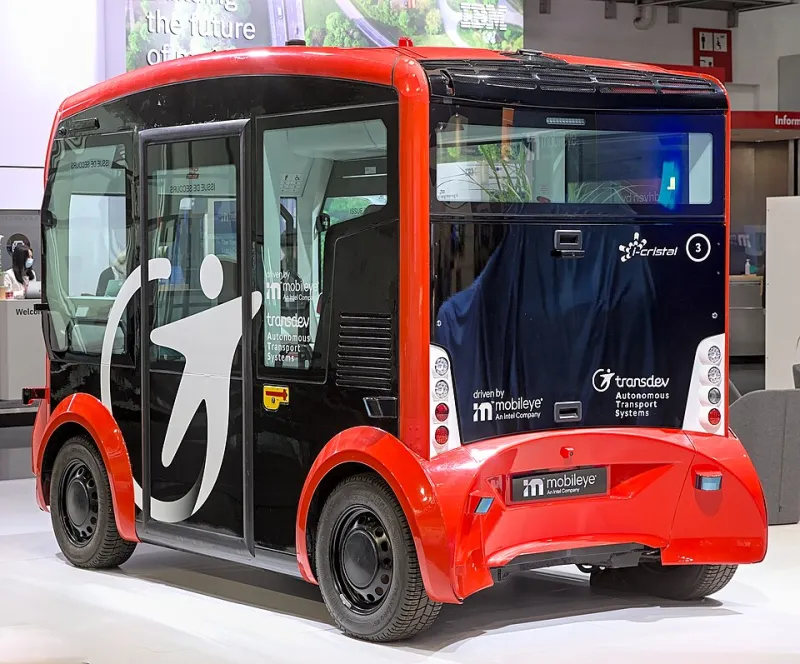
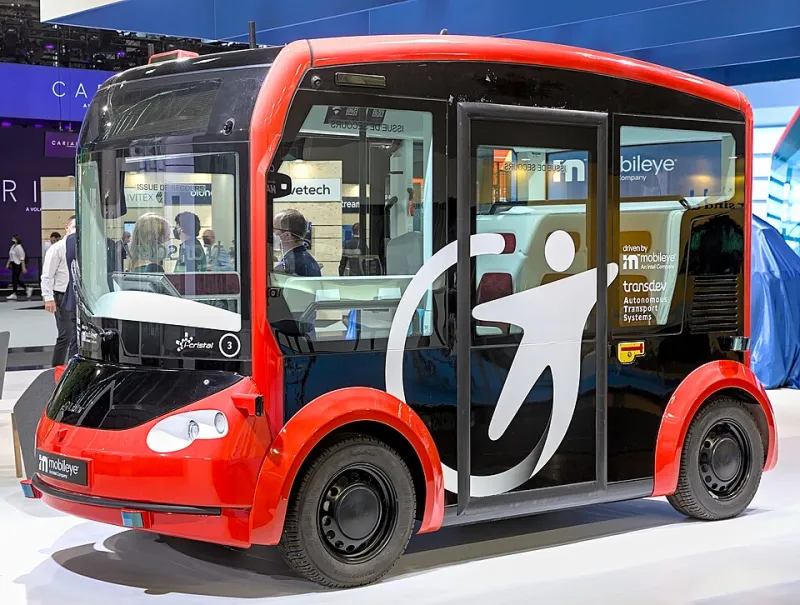
Since autonomous shuttles began regular service across Nagoya, Toyota, and surrounding municipalities, Aichi's licensing authorities faced an unfamiliar problem: human drivers didn't know how to behave around the machines. Some tailgated robot shuttles to test their reactions. Others stopped abruptly in front of them out of caution. A handful treated the vehicles as novelties to be photographed at close range.
The prefecture's response was not enforcement but education. Working with automakers headquartered in the region and municipal transit operators, Aichi quietly revised its driver training materials to introduce what officials there call road literacy for the autonomous age — a practical vocabulary for coexisting with algorithmic drivers.
The revised modules cover three core areas. First, sensor awareness: understanding where a driverless vehicle's lidar and camera envelopes actually reach, and why cutting narrowly in front of a shuttle behaves differently than cutting in front of a human. Second, machine predictability: recognizing that autonomous vehicles brake earlier, accelerate more gently, and hold lanes with a consistency human drivers should anticipate rather than exploit. Third, interaction protocol — how to signal intent to a machine that reads behavior rather than eye contact, and what to do when a shuttle yields in an unexpected way.
What the American Manual Doesn't Cover
Consider the typical scenario on a US street today. A Waymo in Phoenix, a Cruise-era remnant in San Francisco, a school-district pilot in suburban Michigan — and behind the wheel, a licensed driver who received zero instruction on any of it. State driver handbooks from California to Florida remain silent on autonomous vehicle behavior. The National Highway Traffic Safety Administration has published guidance for manufacturers; it has published almost nothing for the teenager studying for a permit.
The consequences are not hypothetical. American AV operators report a familiar catalog of human-caused incidents: drivers blocking robotaxis to assert right-of-way, emergency responders unsure how to interact with a vehicle that has no one to flag down, and everyday confusion at intersections where machine logic and human habit diverge.
Aichi's answer treats these not as edge cases but as core competencies. In the prefecture's updated framework, understanding how an autonomous vehicle perceives the world is treated as fundamental as checking a mirror.
Beyond the License: Schools and Insurers
What makes the Aichi model instructive for the United States is how far it reaches past the DMV. High school road-safety courses in the prefecture now include mixed-traffic scenarios, on the theory that today's fifteen-year-olds will spend their entire driving lives alongside machines. Driving instructors receive supplemental certification covering autonomous vehicle behavior. Even fleet operators run refresher sessions for veteran drivers whose instincts were formed in an all-human era.
American institutions could adapt each layer. State DMVs could add AV-awareness sections to handbooks and knowledge tests without waiting for federal mandates. Driver's ed providers — a largely private ecosystem in the US — could incorporate mixed-traffic modules now, ahead of regulation. And insurers, who already price autonomy-related risk with imperfect data, have a stake in a public that understands what these vehicles can and cannot do.
There is precedent for this kind of curricular shift. American road education absorbed seatbelt campaigns, graduated licensing, and distracted-driving modules over the past four decades. Each required the same admission: that the road had changed and the textbook had not.
The Etiquette Question
Perhaps the most transferable piece of Aichi's work is also the softest. The prefecture's materials devote real attention to etiquette — the unwritten rules of mixed traffic. Don't hover in a shuttle's sensor envelope. Don't brake-check a machine to test its reflexes. Recognize that a driverless bus stopping short may be protecting a pedestrian you cannot see.
American traffic culture, regional and often confrontational, will not absorb these norms by osmosis. Phoenix, Austin, and the Bay Area are already running the live experiment, with public sentiment swinging on every viral incident. A formal curriculum — taught in high schools, tested at the DMV, reflected in insurance discounts — is how norms become defaults.
Writing the Second Edition
Aichi's lesson is less about any specific module than about timing. The prefecture revised its materials while autonomous vehicles were still rare enough that education could get ahead of friction, rather than trail it. In the United States, that window is closing: driverless services are expanding across Sun Belt metros faster than any state has updated its driver manuals.
The next generation of American drivers will share every commute with algorithms. Whether they do so fluently or resentfully depends on whether someone, somewhere, decides the driver's ed textbook deserves a rewrite. Aichi has already drafted it. The English edition remains unwritten.