Designed for the Decade Ahead: How Aichi Built Autonomy Around Its Oldest Riders First
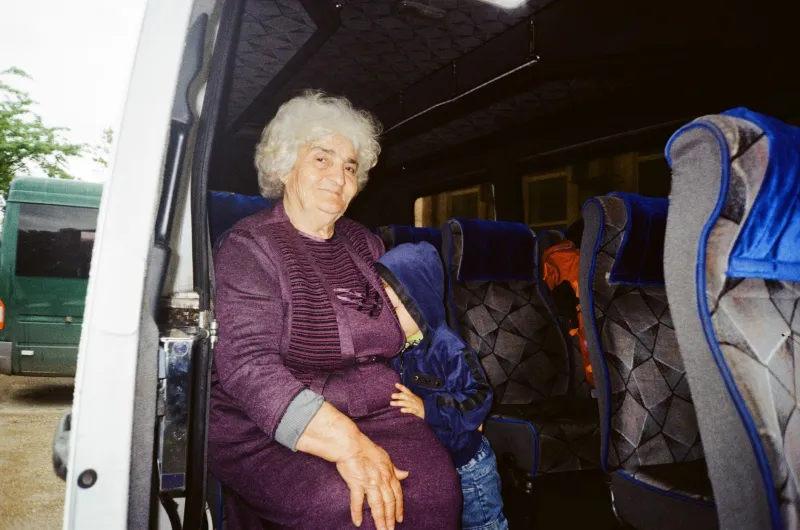
When the first autonomous buses began circulating through Aichi Prefecture's residential districts, they were not built for early adopters. They were built for Mrs. Tanaka, an 82-year-old retired textile worker who needed to reach a dialysis appointment twelve kilometers away and could no longer renew her driver's license. That single, unglamorous reality — repeated across thousands of households in Japan's most industrial prefecture — shaped a design philosophy that American transit planners are only now beginning to study seriously.
A Society That Could Not Wait for the Future
Aichi did not choose to become a proving ground for elder-centered autonomy. Demography chose for it. With more than a quarter of its residents over 65, and rural pockets where the ratio climbs far higher, the prefecture confronted a question the United States is only starting to face: what happens when an entire generation loses the ability to drive in places where buses run twice a day, if at all?
The answer, tested incrementally since the mid-2010s and accelerated through the 2025 corridor initiatives, was to treat autonomy not as a technology showcase but as a lifeline. Every design decision — boarding height, door timing, cabin voice, failure protocols — was filtered through the needs of riders in their seventies, eighties, and beyond.
The Details That American Pilots Skipped
US autonomous shuttle pilots, from Minnesota to Florida, have frequently stumbled on the same obstacle: the vehicles work, but older residents decline to ride them. Aichi's experience suggests the problem is rarely the technology itself. It is everything surrounding it.
Consider boarding. Aichi's low-floor autonomous buses were specified with a slope shallow enough for wheeled walkers and rollators, with automated ramps that deploy on a timer generous enough for slow, deliberate movement. Door-open durations are measured not in seconds of efficiency but in seconds of dignity. These sound like trivialities until you watch an 80-year-old stand at the curb, calculating whether she can make it aboard before the doors close.
Then there is the cabin itself. Voice interfaces in Aichi's vehicles were tuned for slower speech patterns, higher-pitched voices, and regional dialects — and, critically, for riders who might ask the same question three times. Emergency call points are physical, oversized, and placed within reach of a seated passenger with limited arm extension. Remote operators, when contacted, are trained to speak with the cadence of a caregiver rather than a tech-support agent.
Trust Was Engineered, Not Marketed
The most transferable lesson from Aichi may be cultural rather than technical. Prefectural officials learned early that older riders did not trust driverless vehicles because of sensor specifications or safety statistics. They trusted them because a neighbor rode one and came back with a story. So the rollout strategy leaned on visible, repeated, uneventful success — the most powerful marketing a driverless bus can receive.
US agencies would do well to internalize this. Outreach campaigns built around press events and ribbon cuttings reach the already converted. Aichi's quiet accumulation of ordinary trips, taken by ordinary elderly residents, did more for public acceptance than any demonstration day.
What This Means for an Aging America
The United States is aging faster than most of its infrastructure planners admit. By 2030, every baby boomer will be past 65, and the generation that defined itself by the automobile will be confronting license restrictions in car-dependent suburbs and exurbs built on the assumption of perpetual driving ability.
Aichi's model offers three concrete policy takeaways. First, specify autonomous transit for the most vulnerable user, not the average one — the resulting system serves everyone better. Second, fund the human layer: remote operators, community liaisons, and trained responders are not overhead but the trust infrastructure on which ridership depends. Third, measure success in access, not ridership volume. A route that reliably delivers thirty seniors to medical appointments may matter more than one that moves thousands of commuters.
The loop that Aichi has spent a decade closing — between an aging population and an autonomous answer — is one that American cities will be forced to close within the decade. The blueprint already exists. It was drawn by passengers in their eighties, one careful boarding at a time.