Fleet Conductors and Remote Operators: How Aichi Is Writing the Job Descriptions That Don't Exist Yet
The Question America Keeps Postponing
Every conversation about autonomous vehicles in the United States eventually collides with the same uncomfortable math: there are roughly 3.5 million truck drivers, taxi operators, and delivery workers whose roles will change — in some form — as automation matures. What rarely follows that statistic is a plan. Not a talking point, not a retraining pamphlet, but an actual, structured pathway from today's transportation jobs to tomorrow's.
In Aichi Prefecture, that pathway is being built right now, deliberately and in public view.
New Titles on Old Payrolls
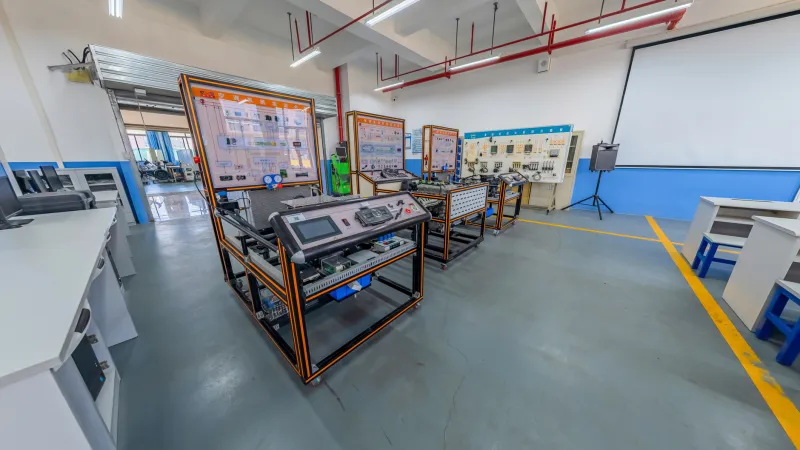
Walk through the career centers attached to Aichi's technical colleges and you'll encounter job categories that sound almost fictional: fleet conductors who supervise groups of autonomous vehicles the way an air traffic controller manages aircraft; remote operators stationed at monitoring hubs, ready to assist vehicles that request human judgment; AV maintenance specialists trained to service sensor arrays rather than carburetors.
These are not hypothetical roles. Toyota's Woven City experiments, the Nagoya-area Level 4 shuttle pilots, and the prefecture's expanding automated logistics corridors have all generated genuine demand for people who can bridge the gap between human operations and machine-driven transport. Local vocational schools — including branches of the Toyota Technological Institute's outreach programs and regional polytechnic centers — have responded with certificate tracks designed around these jobs rather than retrofitted from legacy mechanic curricula.
The distinction matters. Aichi's approach treats the autonomous transition not as a disruption to be softened but as a labor market to be constructed from the ground up.
Why Deliberateness Beats Speed
American workforce development in the transportation sector has historically been reactive. Community colleges often scramble to build programs after an industry shift has already occurred, and retraining initiatives for displaced workers carry a mixed record at best. The US Department of Labor's flagship retraining programs have shown modest wage recoveries, and transportation workers — often unionized, often mid-career — face particular friction when transitioning.
Aichi's model inverts the sequence. Training programs launch alongside, and sometimes ahead of, the technology deployment. Automakers co-design curricula with schools, guaranteeing that graduates' skills match fleet requirements. Unions and labor representatives, operating within Japan's enterprise-based employment framework, are brought into planning conversations early, which reduces the adversarial dynamic that has stalled similar discussions in American statehouses.
The result is a pipeline that produces what the industry calls "mobility-adjacent" workers: people whose careers begin in autonomy rather than surviving it.
What US Community Colleges Could Borrow
Three elements of the Aichi model translate readily to the American context:
Employer-embedded curriculum. In Aichi, the companies that will hire graduates help write what those graduates learn. US community colleges have precedent here — partnership models in advanced manufacturing in Michigan and Ohio show it works — but autonomous vehicle programs remain sparse and fragmented.
Credential portability. Aichi's certificates are designed to be recognized across employers within the regional ecosystem. In the US, AV training credentials vary wildly by state and provider, undercutting their labor market value.
Transition without stigma. Aichi frames these programs as career advancement, not remediation for displaced workers. That framing — which American workforce advocates have long argued for — changes who enrolls and how employers value the credential.
The Real Bottleneck
The uncomfortable implication for American AV stakeholders is this: the constraint on autonomy may not be technology, regulation, or public trust. It may be people. A fleet of autonomous vehicles requires a support workforce — operators, technicians, safety stewards, logistics coordinators — that the US has barely begun to train.
Aichi understood early that autonomy is not the elimination of transportation jobs but their transformation. The prefecture's bet is that whoever builds the workforce first builds the industry. For American policymakers watching the AV race from a distance, that may be the most exportable idea of all: train for the transition you intend to make, not the one you fear.