Steady Hands at the Wheel: Why Aichi's Automakers Are Winning by Refusing to Rush Full Autonomy
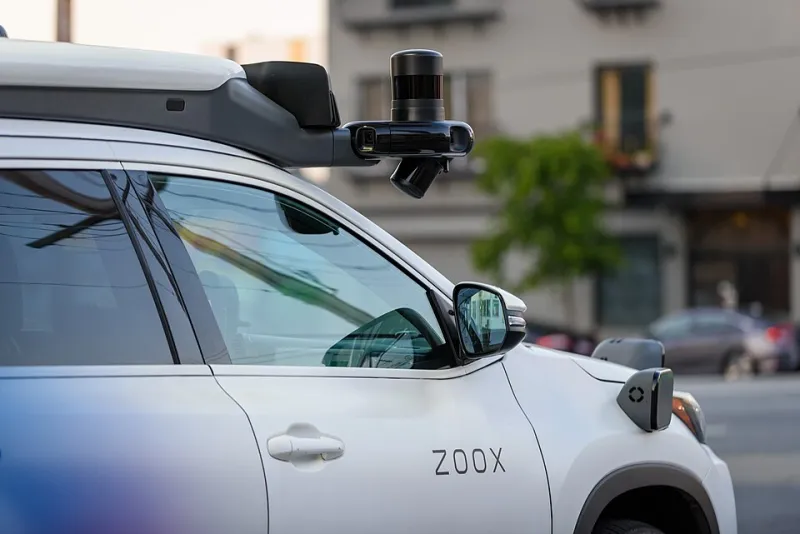
Photo: 9yz, CC BY 4.0, via Wikimedia Commons
In the autonomous vehicle industry, ambition is cheap. Elon Musk has promised full self-driving capability for years. Waymo has logged millions of miles on American roads. The narrative in the United States has long been framed as a race to Level 5—complete autonomy, no human required, steering wheel optional. Yet in Aichi Prefecture, the engineers designing tomorrow's vehicles are asking a fundamentally different question: not can we remove the driver entirely, but should we?
The answer coming out of Toyota's Higashi-Fuji Technical Center and Suzuki's Hamamatsu engineering divisions is a measured, emphatic no—at least for now. And that restraint, counterintuitive as it may seem in an era of technological maximalism, is beginning to look less like timidity and more like strategy.
The Philosophy Behind the Pause
Japanese engineering culture has a term that translates roughly as monozukuri—the art of making things, with an emphasis on craftsmanship, precision, and long-term reliability. It is a philosophy that prioritizes getting things right over getting things done first. Applied to autonomous vehicles, it produces a fundamentally different product roadmap than the one emanating from Mountain View or Austin.
Toyota's approach, formalized through its Guardian and Chauffeur autonomous system framework, explicitly treats the human driver as a critical safety layer rather than an obstacle to be engineered around. The company's engineers describe their target not as replacing the driver, but as augmenting human decision-making with machine precision. Suzuki, operating at a smaller scale but with deep expertise in compact urban vehicles, has taken a similar stance—focusing on Level 3 conditional automation suited to Japan's dense city corridors, with deliberate plans to expand into Level 4 geofenced environments rather than leaping toward universal autonomy.
This is not conservatism born of technical limitation. Toyota's artificial intelligence research labs in Tokyo and its partnership with Woven City—the living autonomous vehicle testbed under construction near Mount Fuji—demonstrate genuine frontier capability. The restraint is philosophical and, crucially, commercial.
What American Consumers Actually Want
Here is the tension at the heart of the US autonomous vehicle market: American consumers consistently express enthusiasm for self-driving technology in surveys, yet adoption data tells a more complicated story. Tesla's Full Self-Driving beta, despite its name, requires active driver supervision and has generated significant regulatory scrutiny. High-profile incidents involving autonomous systems have made mainstream buyers cautious in ways that pure technology coverage often underestimates.
A 2024 AAA survey found that 66 percent of American drivers reported feeling afraid to ride in a fully self-driving vehicle. That number has remained stubbornly high despite years of industry progress. What the same survey revealed, however, was considerably stronger comfort with advanced driver assistance features—lane centering, adaptive cruise control, automatic emergency braking—precisely the capabilities that occupy the Level 2 and Level 3 spectrum.
Aichi's automakers have been reading this data carefully. The commercial logic is straightforward: a technology that 66 percent of your target market actively fears is not ready for mass deployment, regardless of its engineering maturity. A system that enhances driver confidence while preserving human agency, by contrast, has a far clearer path to the showroom floor.
The Regulatory Dimension
Beyond consumer psychology, the regulatory environment in the United States is increasingly aligning with Aichi's cautious framework. The National Highway Traffic Safety Administration has moved to tighten reporting requirements for autonomous system incidents, and several states have enacted legislation requiring human oversight for vehicles operating above Level 2. California's Department of Motor Vehicles, which oversees the most active autonomous testing environment in the country, has signaled growing skepticism toward unsupervised deployment outside controlled corridors.
Toyota's legal and regulatory teams have been quietly positioning the company to benefit from this shift. By designing systems that keep a licensed human operator in the loop—responsible, accountable, and legally liable—Aichi's automakers sidestep the thorny liability questions that have slowed Waymo's commercial expansion and generated congressional scrutiny of Tesla's marketing practices.
Suzuki's approach to the US market, channeled partly through its partnership with Toyota, follows a similar logic. Vehicles equipped with Level 3 systems can be insured under existing frameworks, financed through conventional auto loans, and sold by dealerships without requiring specialized operator licensing. The friction of adoption is dramatically lower.
Engineering Tradeoffs Silicon Valley Underestimates
There is also a purely technical argument for the Aichi model that deserves more attention in American technology coverage. Level 5 autonomy requires a vehicle's sensing and decision-making systems to handle every conceivable scenario—black ice on a Montana highway, a child chasing a ball into traffic in a Chicago neighborhood, a construction detour on a rural road with no lane markings. The edge-case problem is not merely difficult; some researchers argue it is, in practical terms, unsolvable within a commercially acceptable cost envelope for the foreseeable future.
Level 3 and Level 4 systems, by contrast, are designed around defined operational domains. A Level 4 vehicle that handles highway driving between Chicago and Milwaukee with near-perfect reliability, but transfers control to the human driver in ambiguous urban scenarios, is a product that can be manufactured, tested, warranted, and sold today. It is also a product that accumulates real-world data across millions of human-supervised miles—data that progressively improves the system's capability to expand its operational domain over time.
This iterative, domain-expansion model is precisely how Toyota's engineers describe their trajectory. Rather than attempting to solve full autonomy as a single grand engineering challenge, they are building a series of reliable, commercially viable systems that compound in capability. The analogy one Toyota engineer offered was instructive: you do not learn to fly by jumping off a cliff. You learn in a simulator, then with an instructor, then solo in clear weather, then in increasingly complex conditions.
The Five-Year Horizon
By 2030, industry analysts at Gartner and McKinsey project that Level 3 and Level 4 systems will represent the dominant commercial autonomous vehicle segment in both Japan and the United States, with Level 5 remaining largely confined to controlled environments and specialized logistics applications. If those projections hold, Aichi's automakers will have spent the intervening years building market share, regulatory goodwill, and consumer trust that their American competitors—distracted by the Level 5 horizon—may find difficult to replicate quickly.
The loop from Aichi to the American consumer is longer than a direct flight from Tokyo to Los Angeles. It runs through engineering philosophy, regulatory positioning, consumer psychology, and commercial strategy. But for Toyota, Suzuki, and the network of suppliers and startups orbiting their Aichi base, that longer route may be the one that actually arrives.