The Invisible Infrastructure: How Aichi's Component Makers Became the Backbone of Global Autonomous Driving
Photo: Joegoodfriend, CC BY-SA 4.0, via Wikimedia Commons
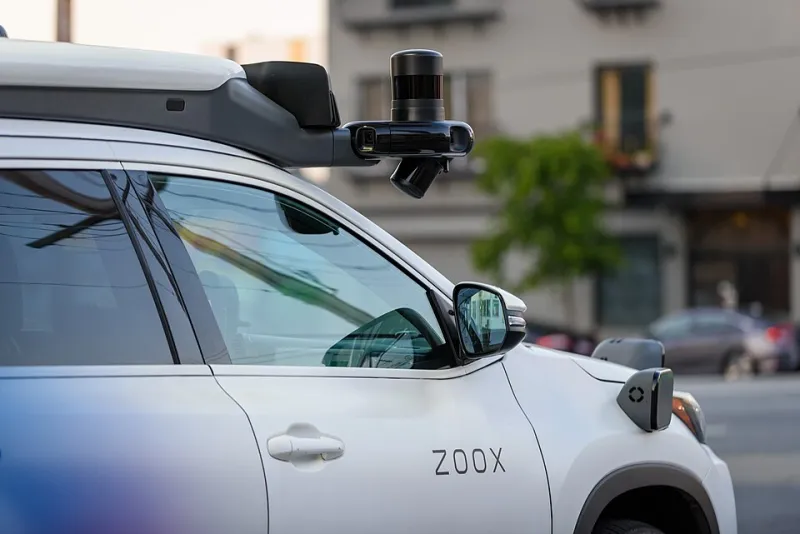
When a Waymo robotaxi navigates the streets of San Francisco, its sensors generate roughly 1.4 terabytes of data per hour. The cameras, radar arrays, and LiDAR units responsible for that data deluge carry brand names familiar to automotive insiders but largely invisible to American passengers settling into the back seat. Many of those components were designed, engineered, and manufactured in Aichi Prefecture—the same region that gave the world the Toyota Production System and the lean manufacturing principles that reshaped global industry.
This geographic concentration is not a coincidence. It is the product of decades of deliberate investment, accumulated expertise, and the kind of supplier-manufacturer relationships that Japanese industry has cultivated since the postwar reconstruction era. It is also, increasingly, a geopolitical variable that US policymakers, technology executives, and national security analysts are beginning to examine with uncomfortable urgency.
The Aichi Component Ecosystem
Denso Corporation, headquartered in Kariya within Aichi Prefecture and majority-owned by Toyota, is the world's second-largest automotive supplier by revenue. Its autonomous driving division produces a comprehensive portfolio of sensing hardware—millimeter-wave radar systems capable of detecting objects at ranges exceeding 250 meters, forward-facing camera modules with integrated image processing, and the electronic control units that fuse multi-sensor data into actionable vehicle commands. Denso's components appear not only in Toyota and Lexus vehicles but in platforms built by manufacturers across Europe, South Korea, and the United States.
Aisin, another Aichi-based Toyota Group member, occupies a complementary position in the autonomous vehicle supply chain. Its advanced driver assistance system modules, parking automation hardware, and electromechanical actuator systems are embedded in vehicles ranging from luxury sedans to commercial delivery platforms. Aisin's 2021 merger with Aisin Seiki and Aisin AW created one of the largest integrated automotive technology companies in the world—a company whose influence on global AV development is difficult to overstate.
Beyond these anchor corporations, Aichi hosts a dense constellation of tier-two and tier-three suppliers producing specialized components: optical lens assemblies for camera systems, electromagnetic interference shielding for radar units, high-precision connectors for sensor data transmission. This layered ecosystem means that disrupting Aichi's supply output is not a matter of replacing one or two large manufacturers. It requires reconstructing an entire technical infrastructure that has been refined over generations.
What American Autonomy Owes to Japan
The dependency runs deeper than most American technology coverage acknowledges. While US companies like Luminar Technologies and Velodyne have made significant advances in LiDAR development, the broader autonomous vehicle sensor market remains heavily reliant on Japanese manufacturing capacity for production-scale hardware. Prototype LiDAR units built in California are frequently tested in conjunction with radar and camera systems sourced from Aichi suppliers. The integration work—calibrating disparate sensors to function as a unified perception system—often draws on reference architectures developed by Denso and its peers.
This is not a criticism of American innovation. It reflects a structural reality of global manufacturing: the United States excels at software development, system integration, and frontier research, while Japan's automotive supply chain offers unmatched precision manufacturing at commercial scale. The two capabilities are complementary, which is precisely what makes their interdependence both productive and, in certain scenarios, strategically precarious.
Consider the implications of a significant supply disruption. The 2011 Tōhoku earthquake and tsunami demonstrated how quickly automotive production lines worldwide could be idled when Japanese component suppliers were affected. A similar event today—whether natural, geopolitical, or the result of trade policy escalation—would not merely slow car production. It would halt the testing and deployment programs of virtually every major autonomous vehicle developer operating in the United States.
The Geopolitical Calculus
US-China trade tensions have already prompted significant policy attention toward semiconductor supply chains, with the CHIPS and Science Act representing a multi-billion-dollar effort to reshore domestic chip manufacturing. A parallel conversation about automotive sensor supply chains has been slower to develop, partly because the dependency runs through an ally rather than a strategic competitor.
Japan and the United States maintain one of the most robust bilateral security relationships in the Indo-Pacific, and Aichi's manufacturers are not adversarial actors. But alliance relationships do not eliminate supply concentration risk. A natural disaster, a domestic Japanese regulatory change, a labor dispute at a key facility, or even a sharp appreciation of the yen affecting export competitiveness could constrain supply independent of any geopolitical intent.
Some US policymakers have begun raising these questions in the context of broader industrial policy debates. The House Select Committee on the Chinese Communist Party has examined semiconductor dependencies extensively; less attention has been paid to the sensor hardware layer that sits between chips and the autonomous vehicle systems they power. That gap in policy attention represents a meaningful vulnerability.
Denso and Aisin, for their part, have been proactive about geographic diversification. Both companies operate manufacturing facilities in the United States—Denso maintains major production sites in Michigan, Tennessee, and Georgia—and have invested in expanding North American capacity. These investments reflect a commercial awareness that customer proximity and supply chain resilience are increasingly valued by American automakers and technology companies alike.
Innovation at the Component Level
It would be a mistake, however, to frame Aichi's sensor industry purely through a risk lens. The more significant story is the pace of innovation occurring within these companies, much of which has direct implications for American autonomous vehicle development.
Denso's research division has been advancing solid-state LiDAR technology that eliminates the mechanical rotating elements of first-generation units—reducing cost, improving durability, and enabling integration into vehicle body panels rather than roof-mounted pods. This development, if it reaches commercial scale on the timeline Denso has indicated, would meaningfully accelerate the cost reduction curve that analysts identify as the primary barrier to mass-market autonomous vehicle adoption in the United States.
Aisin's work on integrated sensing and actuation—combining perception hardware with the steering and braking systems that act on sensor data—addresses one of the latency challenges that limit autonomous system response times in complex traffic scenarios. The tighter the integration between what a vehicle sees and what it does, the faster and more reliably it can respond to unexpected events.
Rethinking the Supply Chain Narrative
The autonomous vehicle industry has a tendency to narrate itself as a software story—algorithms, neural networks, simulation environments, data pipelines. The hardware layer that makes all of that software meaningful is less photogenic and generates fewer headlines. But the sensors manufactured in Aichi are not commodities. They are precision instruments whose performance characteristics directly determine the safety envelope of every autonomous system they power.
For American consumers, regulators, and technology executives, understanding where that hardware comes from—and what it would take to replace it—is not an academic exercise. It is a prerequisite for honest assessment of the autonomous vehicle industry's actual trajectory. The loop from Aichi's factory floors to American roads is shorter, and more consequential, than most people realize.