Ten Thousand Rides, One Verdict: What Aichi's Bus Passengers Are Teaching America About Driverless Trust
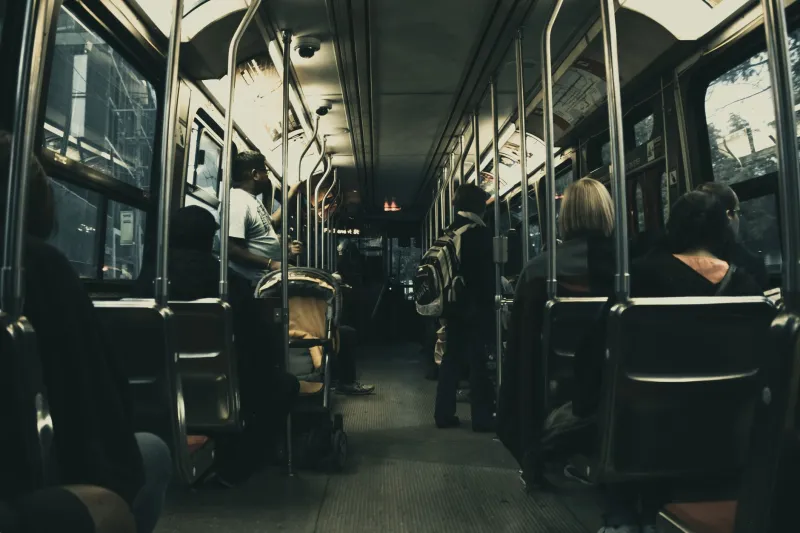
Ask an American transit planner what stands between autonomous shuttles and mainstream adoption, and you'll likely hear about sensors, regulation, or capital budgets. Ask the same question in Aichi Prefecture, and the answer is disarmingly simple: the passenger.
Over the past two years, autonomous bus services across Nagoya, Toyota City, and surrounding municipalities have carried tens of thousands of everyday riders — commuters, schoolchildren, and elderly residents — through mixed traffic. Along the way, operators have collected roughly 10,000 structured rider reviews. That dataset, largely overlooked outside Japan, may be the most candid account yet of what ordinary people actually feel when a machine takes the wheel.
What the Reviews Actually Say
The findings defy the usual assumptions. Riders rarely mention the technology itself. Complaints about lidar, cameras, or software almost never appear. Instead, the feedback clusters around three human factors: predictability, communication, and the presence of a reassuring human figure — even a mostly ceremonial one.
Riders consistently praised smooth, early braking and gentle acceleration over raw speed. One recurring theme in the reviews translates roughly as "it drives like a careful grandmother," a phrase that reads as high praise. Conversely, the sharpest drops in confidence came not from system errors but from unexplained hesitation — a long pause at an intersection with no context left passengers unsettled, even when the behavior was demonstrably safe.
The lesson is counterintuitive for engineers: perceived safety and actual safety are different products, and passengers only buy the first one.
The Machine Explains Itself
Aichi's operators learned early that silence breeds anxiety. In response, several routes introduced what riders came to call the "talking bus" — in-cabin displays and audio cues that narrate the vehicle's intentions before it acts. "Preparing to yield to the pedestrian ahead." "Merging onto the corridor in three seconds."
Review data shows a measurable shift. After explanatory cues were introduced on one Nagoya route, rider confidence scores among first-time passengers rose sharply, and the share of reviews mentioning nervousness fell by nearly half. The principle — the machine explains itself — has since become a design requirement, not a nicety.
American pilot programs, from Minnesota to Jacksonville, have often treated passenger communication as an afterthought. The Aichi data suggests it may be the single highest-leverage investment available.
Onboarding as Ritual
The second finding concerns first rides. Across the dataset, nearly all lasting anxiety originated in the first ninety seconds of a trip. Operators who invested in structured onboarding — a brief greeting at the stop, a one-minute orientation on what the vehicle would and would not do, a visible attendant for the initial acceleration — saw those passengers return at far higher rates.
In Toyota City, route attendants developed an almost ceremonial script: make eye contact, name the destination, point out the emergency stop, and promise the ride would feel slow on purpose. Review language from onboarded riders was markedly warmer than from those who simply boarded cold. Trust, it turns out, is transferred from human to machine — not generated by the machine alone.
The Attendant Paradox
Here American agencies face a budgetary dilemma. The single strongest predictor of positive reviews was the presence of a human attendant on board. Yet the entire economic case for autonomous shuttles rests on removing that person.
Aichi's operators are treating the attendant not as a permanent fixture but as scaffolding — phased out route by route as rider confidence compounds. Reviews suggest the strategy works: on the longest-running routes, confidence scores held steady even after attendants were withdrawn, because a base of experienced riders normalized the experience for newcomers. Trust, once established socially, becomes self-sustaining.
What This Means for US Transit in 2025
American agencies rolling out AV shuttles this year — in suburban Detroit, in Sun Belt retirement communities, on university campuses — are repeating many of Aichi's early mistakes: treating launch day as a technology event rather than a trust-building campaign.
The prescriptions from 10,000 reviews are inexpensive and portable. Communicate the vehicle's intentions before every maneuver. Design an onboarding ritual and staff it. Deploy attendants strategically and taper them deliberately. And measure passenger sentiment with the same rigor applied to system uptime.
The technology, Aichi's experience suggests, was never the hard part. Convincing a nervous commuter to board a second time is.