Sidewalk Intelligence: How Aichi's Robot Couriers Cracked the Delivery Puzzle American Startups Couldn't
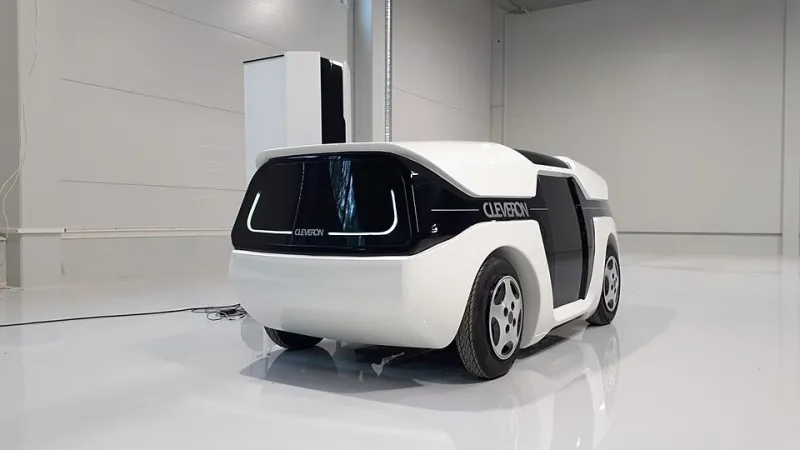
Photo: Jprmg, CC BY-SA 4.0, via Wikimedia Commons
Sidewalk Intelligence: How Aichi's Robot Couriers Cracked the Delivery Puzzle American Startarts Couldn't
For years, the autonomous last-mile delivery sector has occupied an awkward space in American tech culture—perpetually promising, perpetually delayed. Companies like Starship Technologies and Amazon's Scout program have cycled through waves of optimism and quiet retreat, stymied by municipal ordinances, liability concerns, and consumers who remain broadly indifferent to robotic couriers. Meanwhile, in the dense residential corridors of Nagoya and the surrounding Aichi prefecture, a different story is unfolding.
A cohort of Japanese robotics firms—several of them operating with less venture capital than a mid-tier San Francisco seed round—has managed to deploy autonomous delivery units at genuine scale. They are not running pilots. They are running businesses.
Understanding why requires setting aside the assumption that the best technology always wins first.
The Urban Geometry Advantage
Aichi's cities present a logistical paradox that, counterintuitively, has become an asset. Nagoya's residential neighborhoods are compact, pedestrian-heavy, and crisscrossed by narrow lanes that would terrify most American delivery drivers. Sidewalks are shared by cyclists, elderly residents, and school children, often within inches of one another. The density is unforgiving.
Yet this very compression has forced Aichi's delivery robot developers to engineer machines that are genuinely cautious, slow-moving, and socially aware. Operating at speeds rarely exceeding four miles per hour, these units have been designed from the ground up to coexist with unpredictable human behavior rather than avoid it. American competitors, by contrast, frequently optimized their early prototypes for suburban environments—wide sidewalks, predictable grid layouts—and discovered too late that scaling to denser urban cores required a near-complete redesign.
The geographic pressure that seemed like a disadvantage produced more resilient machines.
Regulatory Cooperation as a Competitive Moat
In the United States, a startup hoping to deploy sidewalk robots in a major city typically faces a fragmented regulatory landscape. San Francisco, Washington D.C., and Nashville each maintain distinct ordinances governing robot courier size, operating hours, speed limits, and insurance requirements. Some municipalities have banned autonomous delivery units outright, citing pedestrian safety concerns and the political influence of labor unions representing human couriers.
Aichi operates under a fundamentally different framework. Japan's national government, through its Cabinet Office and the Ministry of Land, Infrastructure, Transport and Tourism, has actively worked to streamline autonomous delivery regulations since 2023. Crucially, Aichi prefecture has served as a designated mobility innovation zone, granting local companies expedited approval pathways that bypass many of the bureaucratic layers their American counterparts must navigate.
This is not a story of deregulation. Japan's standards for autonomous delivery units are, in several respects, more demanding than those found in US cities. What differs is the coherence of the process. Companies operating in Aichi know precisely what is required of them, can predict approval timelines, and engage with regulators who are institutionally motivated to see successful deployments—not merely to prevent unsuccessful ones.
For American entrepreneurs, this distinction is critical. The problem in the US is rarely that regulations are too strict. It is that they are too inconsistent.
The Cultural Reception Gap
Consumer sentiment represents perhaps the most underappreciated variable in last-mile robotics deployment. In American cities, autonomous delivery units have frequently encountered public hostility ranging from mild annoyance to deliberate vandalism. A 2023 incident in San Francisco, in which a driverless vehicle was set alight by a crowd, crystallized anxieties about how American urbanites relate to autonomous technology in shared public spaces.
Aichi's residents have demonstrated a markedly different disposition. Surveys conducted by Nagoya University's mobility research division in early 2025 found that over 67 percent of respondents in urban Aichi neighborhoods rated autonomous delivery units favorably, with elderly residents—a demographic often cited as resistant to new technology—expressing the highest approval rates. Researchers attribute this partly to Japan's longstanding cultural familiarity with service robots in retail and hospitality contexts, and partly to the deliberate way in which Aichi's delivery robot operators introduced their units to communities.
Rather than launching with high-profile press announcements, several Aichi-based firms conducted months of unmanned trials at low traffic hours, allowing residents to encounter the machines gradually and on their own terms. Trust was built incrementally, without the performance pressure of a product launch news cycle.
Hyperlocal Logistics Networks as Infrastructure
Aichi's manufacturing heritage has produced something that rarely appears in technology journalism but matters enormously to last-mile logistics: an exceptionally dense network of small and mid-sized distribution hubs. The region's decades as the center of Japan's automotive supply chain created a culture of just-in-time logistics that permeates commercial life at every level. Convenience stores, pharmacies, and local grocery chains in Aichi maintain inventory and distribution practices that are far more compatible with short-range autonomous delivery than the big-box retail models dominant in American suburbs.
Delivery robots operating in Aichi rarely travel more than half a mile from their dispatch point. That constraint, which might seem limiting, dramatically reduces the operational complexity of each unit and lowers the cost of failure when something goes wrong. American last-mile robotics companies have often attempted to cover much larger service radii, increasing both the technical challenge and the regulatory surface area they must manage.
What American Entrepreneurs Should Take Away
The gap between Aichi's deployment success and American struggles is not primarily a technology gap. Several US startups possess hardware and software capabilities that are competitive with or superior to what is currently operating on Nagoya's streets. The gap is structural.
Three lessons stand out for US-based entrepreneurs and investors watching Aichi's progress.
First, pursue regulatory relationships before market launch. The companies thriving in Aichi invested years in building institutional credibility with local and national government bodies before their first commercial deployment. That groundwork is invisible in press releases but decisive in practice.
Second, design for your actual operating environment, not your ideal one. Aichi's robotics firms built machines for their neighborhoods, not for a hypothetical American suburb. US startups entering dense urban markets should be willing to sacrifice range and speed for social compatibility.
Third, let communities discover the technology rather than announcing it to them. The consumer trust that Aichi's operators have earned was not manufactured through marketing. It was accumulated through quiet, consistent, reliable performance over time.
The last-mile delivery problem is not solved in Aichi—no single city or region can claim that. But the approach being taken here offers a credible path that American entrepreneurs would be wise to study carefully before their next funding round.